Category Archives: USA Storytime

She Tried To Destroy A Waitress’s Life, But Ended Up Losing Everything Instead


The billionaire’s wife enjoyed destroying the lives of anyone who dared to look her in the eye… But the new waitress knew a secret that would bring the queen of Manhattan to her knees.


The Golden Rose was not merely a restaurant; it was a cathedral of excess. Located in the glass-and-steel heart of Manhattan, its walls were lined with rare silk wallpaper, and its floors were polished to such a high sheen that the busboys joked they could see the souls of the miserable rich reflected in the marble. In this sanctuary of the elite, silence was the ultimate luxury. The staff moved like ghosts—unseen, unheard, and utterly terrified.

At the center of this fear lived the legend of Victoria Sterling. To the world of high finance and tech conglomerates, she was the elegant, philanthropic wife of Arthur Sterling, a man whose net worth could stabilize small nations. To the staff of The Golden Rose, she was “The Ice Queen.” She didn’t just demand perfection; she demanded a form of subservience that bordered on the Victorian. She didn’t need to raise her voice to fire someone. A slight curl of her lip, a lingering look at a smudge on a wine glass, or a soft, sighing “This is unacceptable,” was enough to end a career.

Thomas, a former waiter who had been top of his class at NYU, had been the most recent casualty. He had committed the cardinal sin of “human contact.” While placing a plate of $400 white truffles, his pinky finger had brushed the outer rim of Victoria’s bone-china plate. Victoria hadn’t screamed. She hadn’t even looked at him. She simply sat back, folded her hands, and said to the air, “It is contaminated. My evening is ruined.” Within ten minutes, Thomas was in the alleyway with his belongings in a paper bag, his dreams of law school evaporating into the New York humidity.

Then came Rachel Bennett.

Rachel was an anomaly in the world of fine dining. Only three months prior, she had been a rising star at a major news syndicate, an investigative journalist with a knack for smelling a lie from a mile away. But the industry was cruel, and budget cuts didn’t care about talent. She found herself wearing a crisp white apron and carrying heavy trays, her analytical mind constantly deconstructing the power dynamics of the dining room.

When she was warned about Table 4—Victoria’s table—the other servers spoke in hushed, jagged whispers. “Don’t look her in the eye,” they said. “Don’t speak unless she addresses you, which she won’t.”

Rachel watched from the shadows of the service station. She saw Victoria enter—a woman wrapped in a Chanel suit that cost more than Rachel’s college tuition, her face a mask of bored cruelty. She saw a young waiter tremble as he poured her sparkling water, a single drop landing on the tablecloth. Victoria’s eyes, cold as a winter morning in the Atlantic, fixed on the drop.

“I came here for excellence,” Victoria whispered, the sound cutting through the ambient hum of the room like a razor. “It seems I found incompetence instead.”

Rachel didn’t feel the fear the others felt. Instead, she felt a familiar spark—the one she used to feel when she was chasing a lead. She saw the way Victoria’s knuckles went white as she gripped her handbag. She saw the subtle, frantic twitch in her left eye. To the world, Victoria was a predator. To Rachel, she looked like a woman who was desperately trying to keep a crumbling house of cards from falling.

The following Friday, fate intervened. The regular captain, a man who had mastered the art of being a doormat, had been rushed to the hospital with a stress-induced ulcer. George, the manager, looked like he was about to faint.

“Rachel,” George hissed, grabbing her arm. “You’re on Table 4. Please, for the love of God, just… don’t exist. Be a shadow. If she asks for anything, get it instantly. If she insults your mother, thank her for the feedback.”

Rachel straightened her collar. “Don’t worry, George. I’ve dealt with tougher subjects than a billionaire’s wife.”

When Victoria arrived at eight o’clock sharp, the restaurant went into a localized deep freeze. She sat, her movements precise and rigid. Rachel stepped forward, her stride confident but respectful. She didn’t bow her head. She didn’t tremble.

“Good evening, Mrs. Sterling,” Rachel said, her voice steady and clear. “Tonight we have a special of wild-caught turbot, but I suspect you’re interested in the vintage Krug tonight.”

The table went silent. Several waiters nearby stopped mid-motion, waiting for the explosion. Victoria slowly looked up, her gaze traveling from Rachel’s shoes to her eyes. It was a challenge. A silent demand for Rachel to break.

“You speak,” Victoria said, her voice dropping to a dangerous register. “The previous boy didn’t speak. He barely breathed. I liked that better.”

“I find that communication prevents ‘contamination,’ Mrs. Sterling,” Rachel replied with a faint, knowing smile.

Victoria narrowed her eyes. She ordered the most complicated items on the menu, demanding substitutions that were technically impossible. Rachel didn’t flinch. She noted every detail, her journalistic memory capturing the specifics effortlessly. Throughout the meal, Victoria tried every trick in her arsenal. She sent back a wine because it was “too aggressive.” She complained that the air conditioning was directed specifically at her neck. She dropped her silk napkin twice, watching to see how fast Rachel would replace it.

Each time, Rachel responded with a calm, unbreakable dignity. She wasn’t playing the role of a servant; she was playing the role of an equal who happened to be providing a service.

The breaking point came at dessert. Victoria ordered the chocolate soufflé. When it arrived, perfect and billowing, Victoria took a small silver spoon, touched the top, and then let it drop onto the table with a clatter.

“It’s cold,” Victoria lied. It was clearly steaming. “Send it back. And bring me your manager. I think your employment here has reached its expiration date.”

The dining room held its breath. George the manager began to step forward, his face pale. But Rachel didn’t move. She leaned in just a fraction—closer than any server was ever allowed.

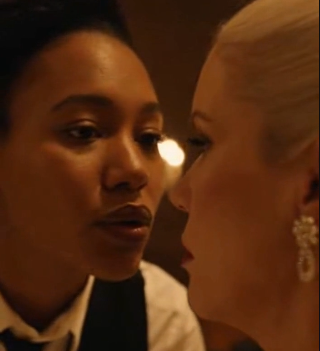
“Mrs. Sterling,” Rachel whispered, low enough that only Victoria could hear. “The soufflé is perfect. Just like your husband’s offshore accounts in the Cayman Islands were perfect… until the audit began this morning.”

Victoria’s face transitioned from ivory to a ghostly grey. Her hand, which had been reaching for her wine glass, stopped mid-air.

“What did you say?” Victoria hissed, her mask of composure finally cracking.

“I used to be a journalist, Victoria,” Rachel said, dropping the formal title. “I spent six months tracking the ‘Sterling Foundation’s’ diverted funds. I know why you’re so angry. I know that your husband is leaving you, and I know that the ‘fear’ you project in this restaurant is the only power you have left in your life. But taking it out on a nineteen-year-old busboy won’t save your bank account.”

For the first time in the history of The Golden Rose, Victoria Sterling had nothing to say. She looked at Rachel, and for a fleeting second, the Ice Queen disappeared. In her place was a terrified woman who realized she was no longer invisible.

“The soufflé?” Rachel asked, her voice returning to its professional, pleasant tone.

Victoria looked down at the dessert. Her voice was a mere shadow of itself. “It’s… it’s fine. Thank you.”

Rachel nodded. “Enjoy your evening.”

As Rachel walked back to the kitchen, the staff stared at her as if she had just tamed a dragon. Victoria finished her meal in total silence, paid the bill—including a 50% tip—and left without looking back. She never bullied another waiter again. And Rachel? She didn’t stay a waitress for long. Within a month, she published the story that would change the Sterling empire forever, proving that sometimes, the person serving your dinner is the one holding all the cards.

I Offered My Foster Son Water, What He Said Next Changed Everything


My foster son trembled before a glass of water… But when I said he didn’t have to ask, he collapsed and whispered a question that shattered my world.


The silence in the house was the first thing I noticed when Leo arrived. It wasn’t the peaceful quiet of a lazy Sunday morning, or the comfortable hush of a home settling into its rhythm; it was a heavy, suffocating silence, the kind that spoke of survival, not solace. It felt like the air itself was holding its breath around him, a palpable tension.

Leo, my new seven-year-old foster son, had been with me for exactly six hours. Six hours during which he hadn’t touched a single one of the brightly colored toys I’d carefully arranged in a basket – the LEGOs, the action figures, the worn but loved teddy bear. He hadn’t sat on the plush sofa with its inviting throw blankets or the cozy armchair by the window. He hadn’t spoken a word above a whisper, his voice a fragile thread barely audible against the gentle hum of the refrigerator or the distant chirping of crickets outside. He stood, rigidly, in the precise center of the living room rug, his battered sneakers perfectly aligned with the geometric pattern. It was as if stepping even an inch onto the polished hardwood floor, or indeed, making any unapproved movement, was a transgression punishable by an unseen, yet deeply feared, law.

I stood in the kitchen doorway, wiping my hands on a dish towel, a dull, familiar ache throbbing in my chest. It had been there, constant and unwelcome, ever since my divorce had left an echoing emptiness in my meticulously planned life. I longed to be a mother, a need so profound it felt like a physical hunger, a gnawing emptiness in my soul that no amount of personal achievement or quiet evenings could fill. I had diligently taken all the classes, endured the rigorous background checks, and meticulously prepared the “cool kid” bedroom with its superhero sheets and glow-in-the-dark stars, imagining laughter and bedtime stories. But none of the training manuals, none of the well-meaning social workers, none of my own hopeful daydreams, had told me what to do when a child looked at you as if you were a ticking bomb, liable to detonate at any unexpected movement, any misplaced word. They hadn’t prepared me for this profound, unsettling stillness.

“Leo?” I called out softly, my voice carefully modulated, trying to project warmth without sounding imposing, trying to bridge the vast, invisible chasm between us.

He flinched. It was a subtle movement, a tightening of his small shoulders, a tremor barely perceptible, yet profoundly there. His body seemed to coil, ready for impact. He turned slowly, his gaze fixed on my waist, never rising to meet my eyes. It was a practiced deference, an avoidance I found deeply unsettling, a ghost of past interactions I could only imagine.

“Yes, Ma’am?” His voice was barely a breath, a faint rustle of air, as if speaking any louder would draw unwanted attention.

“You don’t have to stand there, honey,” I said, trying to infuse my tone with genuine lightness, with an easy invitation. “You can sit on the couch. You can turn on the TV. This is your home now.” I swept my hand around the living room, a silent plea for him to relax, an offering of sanctuary.

He didn’t move. He simply nodded, a jerky, robotic motion that lacked any real comprehension. His eyes, though still averted, seemed distant, preoccupied. “I’m okay, Ma’am. I’m waiting.”

“Waiting for what?” My brow furrowed, a growing sense of unease starting to prickle at me, a cold premonition unfolding in my gut.

“For the rules list.”

I blinked, confused. The warmth in the kitchen, usually so comforting, seemed to dissipate, replaced by a sudden chill that raised goosebumps on my arms. “The rules? Well, we don’t really have a list, Leo. Just… be kind, brush your teeth, no running with scissors. Normal stuff. Common sense, you know?” I tried to offer a small, reassuring laugh, but the sound felt hollow, brittle in the heavy air.

Leo finally looked up, and the raw confusion in his eyes pierced through my carefully constructed composure, shattering it like thin ice. It wasn’t childish bewilderment, the kind you see when a child doesn’t understand a complex game. This was the genuine incomprehension of someone dropped into an alien world, a place where the fundamental laws of existence had suddenly been rewritten. He couldn’t fathom a reality without a rigid, explicit set of laws governing every action, every breath. “But how do I earn points?” he asked, his voice a whisper, laced with a fear he didn’t quite understand how to hide, a fear that was a fundamental part of his being.

“Points?” I repeated, the word tasting foreign and bitter on my tongue, a concept so utterly divorced from the world I wanted to create for him.

“For dinner,” he clarified, his voice trembling slightly, his small hands clenching at his sides, knuckles white. “And for the bathroom. I need to know the exchange rate.” He spoke of his most basic human needs as if they were commodities, privileges to be earned, to be bought with good behavior or suffering.

A cold, icy dread ran down my spine, seemingly dropping the temperature in the warm Ohio kitchen by twenty degrees. The gentle hum of the refrigerator suddenly seemed ominous, like a distant, menacing growl. I walked over to him, my movements slow and deliberate, my heart pounding a frantic rhythm against my ribs. I knelt down, trying to make myself less imposing, ignoring the subtle way he instinctively leaned away from me, a faint shadow of fear crossing his face, his small frame tightening further.

“Leo,” I said, keeping my voice steady, trying to project calm despite the growing alarm within me, the burgeoning anger at a system, at people, I didn’t yet understand. “You don’t need points here. You eat when you’re hungry. You use the bathroom when you need to. Everything here is free. It’s yours.” I gestured vaguely around the room, trying to convey abundance, unconditional access, a haven.

He looked at me then, not with childish innocence, but with the deep-seated skepticism of a cynical old man, a wisdom born of harsh experience, of betrayal. He didn’t believe me. Not for a second. His eyes held a flicker of something I couldn’t quite name – distrust, certainly, but also a profound, heartbreaking inability to process a world so fundamentally different from the one he knew, a world without conditions. My words, meant as comfort, were met with an impenetrable wall of ingrained fear.

The incident that would truly break my heart, that would redefine everything I thought I knew about trauma and resilience, happened two hours later.

It was a scorching July day. The air conditioner was humming, battling valiantly against the oppressive humidity that pressed against the windows, but the heat still clung stubbornly near the glass, a tangible, stifling presence. I had made spaghetti—a universally accepted comfort food, I’d hoped, a neutral offering to a child who seemed to view all food with suspicion. Leo ate with methodical precision, his fork scraping against the plate until it shone, a relentless, almost desperate act. He consumed every single crumb, every last strand of pasta, as if each morsel was precious, too valuable to waste, too critical to leave behind. There was no joy in his eating, only a grim, quiet determination to finish, to perform the required action. He sat perfectly still, his eyes fixed on his plate, never making eye contact.

After dinner, as I started loading the dishwasher, the clatter of plates and the gurgle of water filling the sink provided a momentary soundtrack to our otherwise quiet evening. The silence, though less oppressive now, still held an edge. I turned around to see Leo standing by the refrigerator. He was staring at the water dispenser, a silent, intense focus in his gaze, an almost hypnotic pull. His lips were visibly chapped, almost cracked, a testament to the heat and perhaps something more. He swallowed hard, his Adam’s apple bobbing frantically in his skinny throat, a tiny, urgent movement. He looked at the water, then at me, then back at the water, a silent, agonizing internal debate playing out on his small, vulnerable face. It was clear he was parched, desiccated by the summer heat and perhaps by something far deeper, a deeper thirst for safety or kindness he had never known.

“Go ahead, bud,” I said, smiling, trying to project an easy, welcoming demeanor, unaware of the treacherous ground beneath my feet. “Get some water. As much as you want. There’s plenty.”

He froze. His entire body stiffened, like a small animal caught in a predator’s gaze, every muscle tensing. “May I?” he asked, the question laced with an almost unbearable hesitation, with a deep-seated expectation of rejection, as if he expected a trick, a cruel joke.

“Of course,” I replied, my smile unwavering, though a knot of unease began to tighten in my stomach, a cold tendril of fear curling around my heart. What was he afraid of?

He took a plastic cup—one I’d specifically bought because it was unbreakable, a small, futile attempt at creating a safe, forgiving environment—and filled it. Exactly halfway. Not a drop more. It was a precise, measured amount, dictated by an invisible ledger. He drank it in one long, desperate gulp, his throat working visibly, gasping for air when he finished, his eyes still wide and wary. He placed the cup down with deliberate precision, then looked at me, waiting. Waiting for permission, for a directive, for… what judgment?

“You can have more,” I said, my voice softer now, a tremor of concern starting to creep in, a sense of growing alarm. “It’s hot out. And you’ve been so quiet.”

He shook his head, his brown hair falling across his eyes, his gaze once again dropping to the floor. “I don’t have any credits left.”

I stopped loading the dishwasher. The sound of the running water in the sink, which moments ago had been soothing background noise, suddenly became deafening, an overwhelming, accusatory rush. “Leo, what are you talking about?” My voice was sharper than I intended, laced with disbelief, with a nascent horror.

He pointed to his now-empty plate, a clear, logical connection in his traumatized mind. “I finished the meal. That’s one drink. If I want a second drink, I have to do a chore. Or… or take a timeout.” His voice trailed off, the last words barely audible, filled with a palpable fear that was sickening in its intensity. A timeout. What did that mean in his past?

My stomach churned, a cold, sickening sensation. I turned off the faucet with a sharp twist, the sudden silence almost as jarring as the water’s roar, and dried my hands, trying desperately to keep the rage—a sudden, fierce, protective rage at whoever had instilled such terror in this small boy—from showing on my face. My breath caught in my throat, a painful constriction. I walked over to the fridge, took the cup from the counter, filled it to the brim with ice-cold water, the condensation already beading on its surface, promising sweet relief, and gently, slowly, handed it to him. My hand was steady, but my heart hammered.

“Drink,” I commanded, my voice deliberately gentle, yet firm, an invitation, not a punishment, a simple offering of unconditional hydration.

He looked terrified. His eyes widened, darting frantically between the full cup and my face, searching for a hidden meaning, a trap, a cost he couldn’t fathom. “But I didn’t—” he started, his voice a choked gasp.

“Leo, listen to me. Look at me.” I waited, holding the cup steady, my gaze unwavering, until his terrified brown eyes finally met mine, filled with a raw, unadulterated fear that made my own heart ache with a physical pain. “In this house, water is free. You can drink the whole ocean if you want to. You never, ever have to ask, and you never have to pay for it. Understand? It’s yours. Always. There are no points. No credits. Just water.”

I thought I was being kind. I thought I was liberating him, offering him freedom from a terrible, unseen burden, a cruel, invisible leash.
I was wrong.
Utterly, catastrophically wrong.

The cup slipped from his small, trembling fingers.
Smack.
The sound was sharp, brittle, echoing in the sudden, horrifying silence of the kitchen, amplifying the shock of the moment. Water splashed everywhere—a cold, cruel spray soaking his oversized cargo shorts, pooling instantly on the shiny linoleum, a cold wave splattering onto my bare feet and socks.

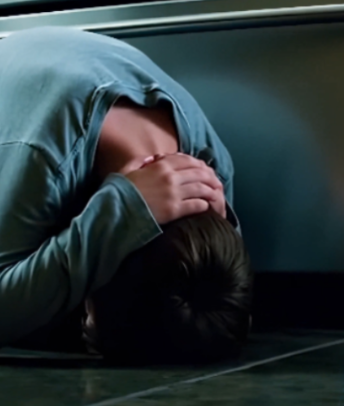
Leo didn’t jump. He didn’t run. He didn’t even cry out in surprise or childish frustration over the mess. His reaction was instantaneous, terrifying in its practiced speed, horrifying in its mechanical precision. He instantly dropped to his knees, slamming his forehead against the wet floor with a sickening thud that made me wince. His hands clasped tightly behind his neck, in a position of surrender that looked not only practiced but perfected, honed through countless, brutal repetitions, etched into his very being.

“I’m sorry! I’m sorry!” he screamed, a raw, guttural sound that didn’t belong in a quiet suburban kitchen, a sound ripped from the deepest parts of a child’s terror, a primal cry of absolute fear. “I didn’t mean to steal it! I’ll give it back! I promise! Please don’t make me go!”

“Leo, it’s okay! It’s just water! You didn’t steal anything! You’re safe!” I cried, my own voice cracking, my hands trembling as I reached down, instinctively, to pull him up, to comfort him, to tell him everything was alright. But my words were futile against the torrent of his fear.

He scrambled backward on his hands and knees, slipping in the spreading puddle of water, his desperation overriding any sense of caution, any thought of the cold or the wet. He backed himself into the tight, unforgiving corner between the refrigerator and the wall, like a cornered animal, his small body a tight ball of pure terror. He was shaking so hard his teeth clicked, an uncontrollable, rhythmic chattering that sent icy shivers down my spine, echoing the chill in my soul. His breath came in ragged, hyperventilating gasps, each inhale a desperate, futile attempt to escape the invisible horrors haunting him.

“Please,” he sobbed, tears and snot streaking his already smudged face, his voice a raw, broken plea. “Please, Miss Sarah. Just tell me. Don’t trick me.”

“Tell you what, baby? I’m not tricking you. You’re safe here. Truly safe.” My voice was barely a whisper now, my own composure shattering under the immense weight of his profound terror, the incomprehensible suffering it implied.

He looked up then, his face a mess of tears and snot, his beautiful brown eyes wide with a terror so pure, so unadulterated, that it stopped my heart in my chest. It was the face of a child who had seen unspeakable things, who expected the worst, always, whose only certainty was pain.

“If I drink without asking… does the closet come next? Or is it the box outside?”

I stood there, frozen in place, the cold water soaking into my socks, a chilling, sickening realization spreading through me like an invasive, toxic vine. The “points system,” the “credits,” the “chores,” the “timeouts”—they weren’t just abstract rules. They were inextricably linked to a profound, physical, isolating terror. For Leo, a glass of water wasn’t a simple drink to quench his thirst. It was a test. A trap. A currency for pain. And in my well-meaning ignorance, my desperate attempt to offer freedom, I had just sprung it.

The weight of his question hung in the air, heavy and suffocating, each word a hammer blow to my heart. “The closet… or the box outside?” The unspoken horrors these simple words represented painted a vivid, horrifying picture in my mind, a stark contrast to the bright, cheerful home I had tried to create. My “cool kid” bedroom, with its superhero sheets, felt like a cruel joke now, an insult to the reality of his past. This was not about superheroes; it was about basic survival, about teaching a broken child how to live again, how to trust the very air he breathed, the water he drank.

I didn’t try to touch him immediately. The sheer panic in his eyes told me that any sudden movement would only deepen his fear. Instead, I sank slowly to my knees, meeting his terrified gaze at his level. My own tears blurred my vision, but I blinked them back, forcing myself to be calm, to be his anchor. “No, Leo,” I whispered, my voice thick with unshed tears and a fierce, nascent protectiveness. “Never. No closet. No box. Not here. Ever.” I slowly reached out, not to grab him, but to gently wipe away a tear from his cheek with the back of my hand, a feather-light touch, watching his reaction closely. He flinched, but didn’t pull away completely.

That night, after I had carefully cleaned up the spilled water and, with painstaking slowness, coaxed him to drink several more small, supervised cups, reassuring him with every sip, Leo finally fell asleep in his superhero bed. But his sleep was fitful, punctuated by small whines and jerking movements. I sat beside his bed for hours, just watching him breathe, the image of his face, contorted in terror, etched permanently into my mind. I stared at the glow-in-the-dark stars on his ceiling, but all I could see were the shadows of a closet, the impenetrable darkness of a box. The anger simmered beneath my skin, a hot, bitter wave against the cold dread. I didn’t know what “the box” was, but I knew, with every fiber of my being, that I would spend every waking moment of my life making sure Leo never saw one again. This was our beginning, a fractured, terrifying, but ultimately hopeful beginning. I had to learn how to parent not just a child, but a survivor. And I was ready.
“I’m Sorry I Ruined Your Meeting”: What My Dying Son Whispered In The Ambulance


My 9-year-old son walked to school with a burst appendix because he was too terrified to tell me he hurt… But the note the doctor found in his pocket shattered my entire reality.

CHAPTER 1: THE STERLING WAY

The phone rang right in the middle of my pitch. It wasn’t just any pitch. It was the frantic, final play for the downtown redevelopment project—the kind of contract that secures a partnership and pays for the Ivy League trust fund.

I silenced it.

“As I was saying,” I continued, smoothing my silk tie, projecting the calm, confident authority of a man who never loses control. “Structure is nothing without discipline. The foundation must be unshakeable.”

The phone vibrated again. Then again. It was buzzing against the mahogany table like an angry hornet.

My boss, Marcus, raised an eyebrow. “David. You might want to get that. It’s the school line.”

I clenched my jaw, feeling the familiar tightening in my temples. “It’s fine. Leo probably forgot his lunch again. He needs to learn consequences. Hunger teaches focus.”

“David,” Marcus said, his voice dropping an octave, losing its friendly veneer. “They’ve called the office line, too. Pick it up.”

I stepped out of the glass-walled conference room, irritation prickling at the back of my neck like a sunburn. I loved my son. I did. But Leo was nine years old. Old enough to pack his bag. Old enough to tie his shoes. Old enough to navigate a Tuesday without needing a rescue mission. Since his mother, Sarah, died three years ago, that had been our mantra. Be a rock. Rocks don’t break. Rocks don’t cry.

“This is David,” I answered, clipping the words, checking the time. 10:15 AM.

“Mr. Sterling?” The voice on the other end wasn’t the secretary. It was heavy, wet, and breathless. “This is Principal Higgins. You need to come to Oak Creek Elementary. Now.”

“Is he in trouble?” I asked, looking through the glass at the investors. “If he got into a fight, suspend him. I’ll deal with it tonight. I’m in a meeting that determines my future.”

There was a silence on the other end. A thick silence that made the hair on my arms stand up.

“Mr. Sterling,” Higgins said, her voice cracking. “The paramedics are already here. Leo collapsed in the cafeteria. He’s not waking up.”

CHAPTER 2: THE DIAGNOSTIC

The drive from the city to the suburbs usually took forty minutes. I made it in twenty.

My mind wasn’t on the medical emergency. Not really. My brain, trained to analyze data and mitigate risk, was running a diagnostic on Leo’s behavior this morning.

He had been slow. Sluggish. He’d sat at the breakfast island, pushing his oatmeal around with a spoon, looking pale, his skin having a strange, greyish sheen.

“I’m not hungry, Dad,” he’d whispered.

“Eat,” I’d told him, not looking up from my iPad, checking the Nikkei index. “Fuel is distinct from pleasure, Leo. You have PE today. You don’t quit on the field, you don’t quit at the table.”

He had eaten it. All of it. He’d gagged once—a sharp, wet sound—took a sip of water, and finished.

I felt a surge of pride remembering that. That was the Sterling way. We didn’t whine. We didn’t complain about tummy aches. We powered through.

I pulled up to the school curb, bypassing the line of parents waiting for pickups. The ambulance was idling by the gym doors, lights flashing but no siren.

That was good, right? No siren meant no rush. No siren meant stable.

I slammed the car door and adjusted my jacket. I needed to project stability. If Leo was just dehydrated or had a flu, I didn’t want him seeing me panicked. Panic is weakness. Panic is contagious.

“Mr. Sterling!”

It was Mrs. Gable, the crossing guard. She was crying. Why was she crying?

I brushed past her, ducking under the yellow caution tape. Two EMTs were wheeling a gurney out of the double doors.

Leo looked so small.

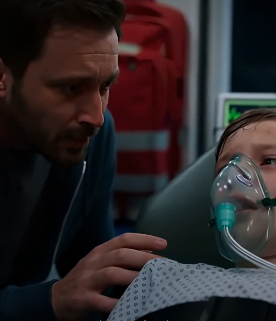
That was my first thought. He looked like a bundle of laundry under that white sheet. His skin was the color of old paper. An oxygen mask covered half his face.

“I’m the father,” I announced, my voice booming in the sudden hush of the parking lot. “Status?”

A female paramedic looked up. She didn’t look relieved to see me. She looked… angry.

“Are you David Sterling?”

“Yes. What happened? Did he fall?”

“He didn’t fall,” she said, her voice tight, clipping the IV bag onto the rail. “He collapsed. His BP is sixty over forty. His temperature is one hundred and four. He’s septic, sir.”

“He was fine this morning,” I insisted, falling into step beside the gurney as they rushed toward the ambulance. “He ate his breakfast. He walked to the car. He didn’t say a word.”

The paramedic stopped. She turned to me, her hand on the back door of the rig. The red strobe lights washed over her face, highlighting the judgment in her eyes.

“Sir, your son’s abdomen is rigid as a board. He’s been in excruciating pain for at least twenty-four hours. Maybe longer. His appendix didn’t just burst; it exploded.”

“That’s impossible,” I scoffed, though a cold knot was tightening in my stomach, heavier than lead. “Leo tells me everything. If he was hurting, he would have said so.”

She didn’t answer. She just loaded him in.

CHAPTER 3: THE APOLOGY

I climbed in the back, sitting on the narrow bench. The doors slammed shut, sealing us in the sterile, chemical-smelling box. The engine roared to life, and the siren finally wailed—a terrifying, lonely sound.

“Leo?” I said, leaning forward.

His eyes fluttered open. They were glassy, unfocused. He looked at the ceiling, then his gaze drifted to me.

I expected him to reach for me. I expected him to cry. I was ready to hold his hand, to tell him ‘Good job for staying strong, buddy.’

But when he saw me, he didn’t reach out.

He flinched.

He tried to curl into a ball, despite the straps holding him down. His breath fogged the plastic mask, coming in short, panicked rasps. The heart rate monitor beside his head started beeping faster. Beep-beep-beep-beep.

“It’s okay,” I said, confused, my own heart hammering against my ribs. I reached out to brush the damp hair off his sweaty forehead.

He squeezed his eyes shut. Tears leaked out the sides, running into his ears.

“I’m sorry,” he mumbled into the mask. His voice was so small I could barely hear it over the siren.

“Shh,” I said. “Don’t apologize. You’re sick. It happens.”

“I’m sorry,” he said again, more frantic this time. “I tried to eat it. I tried to walk straight. Please don’t be mad. I didn’t mean to fall.”

“Mad?” I looked at the paramedic. She was busy checking an IV line, but I saw her jaw clench so hard a muscle popped. “Leo, I’m not mad. Why would I be mad?”

“I ruined the schedule,” he whimpered, his body shaking with rigors. “I know you have the big meeting. I tried to hold it in. I promise. I tried to be a rock, Dad. Just like you said.”

The paramedic looked up then. Her eyes met mine. There was no professional courtesy left in her expression. Just pure, unadulterated disgust.

“Sir,” she said, her voice icy. “He’s not apologizing for being sick. He’s apologizing for being alive right now. You need to sit back.”

I sat back. I felt like I had been punched in the throat.

The ambulance hit a pothole, and Leo let out a sound I had never heard from a human being before—a guttural, strangled scream of agony that sounded like something tearing inside him.

And in that scream, for the first time in three years, I didn’t hear weakness.

I heard terror.

And as I looked at my son, fading in and out of consciousness, clutching the sheet with white-knuckled hands, I realized the terror wasn’t about the pain in his stomach.

He was looking right at me. He was afraid of me.

CHAPTER 4: THE WAITING ROOM

The surgery took three hours.

I spent those three hours pacing the waiting room of St. Jude’s, my expensive Italian loafers squeaking on the linoleum. I checked my phone. Fourteen missed calls from Marcus. Three texts from the client.

Contract signed?
David, where are you?
This is unprofessional.

I stared at the words. They looked like hieroglyphics. They looked like nonsense. I walked over to the trash can and threw the phone in. Just dropped it right on top of a half-eaten bagel.

“Mr. Sterling?”

A surgeon in green scrubs came out. He pulled his mask down. He looked exhausted.

“Is he…” I couldn’t finish the sentence. The word ‘dead’ got stuck in my throat, choked by the bile rising there.

“He made it,” the surgeon said. “Barely. The infection had spread to the peritoneum. Another hour, and we wouldn’t be having this conversation.”

I let out a breath that felt like it had been held for three years. “Thank you. God, thank you.”

“Don’t thank me yet,” the surgeon said, his tone sharp. He didn’t step aside to let me pass. He stood there, blocking my path. “We found something in his pocket, Mr. Sterling. The nurses thought you should see it.”

He handed me a piece of paper. It was wrinkled, stained with sweat, and folded into a tiny square.

My hands shook as I unfolded it.

It was a page torn from a small spiral notebook. Leo’s handwriting was messy, erratic, like he had written it while shaking.

At the bottom, in big, shaky letters, he had written:

I AM SORRY I FAILED NUMBER 5.

I stared at the note. I read line number 5 again. If I throw up, swallow it.

The memory of breakfast hit me. The gag. The sip of water.

He hadn’t been being a picky eater. He had been trying to keep his own vomit down because he thought that’s what I wanted. He thought his agony was an inconvenience to my schedule.

I fell.

I didn’t sit. I didn’t kneel. I collapsed. My legs just stopped working. I hit the hospital floor, clutching that dirty piece of paper to my chest, and a sound ripped out of me that matched the one Leo had made in the ambulance.

“Mr. Sterling?” The surgeon sounded alarmed now.

“I did this,” I sobbed, the tears coming hot and fast, washing away the calm, confident authority of David Sterling. “I made him do this. I told him rocks don’t break.”

“Well,” the surgeon said softly, looking down at me with a mixture of pity and warning. “He’s not a rock, Mr. Sterling. He’s a little boy. And right now, he’s a little boy who thinks his father loves his job more than his life.”

I looked up. “Can I see him?”

“He’s in recovery. He’s sedated.”

“Please.”

CHAPTER 5: A NEW FOUNDATION

I sat by his bed for two days. I didn’t shower. I didn’t shave. I didn’t go to work.

When Marcus showed up at the hospital room door, furious, demanding to know why I had ghosted the closing meeting, I walked out into the hall.

“David, do you have any idea what you’ve cost the firm?” Marcus hissed. “The deal is dead. They walked.”

I looked at Marcus. I looked at his perfect suit, his manicured nails, the stress vein throbbing in his forehead. I looked at him and I saw myself from three days ago.

“Good,” I said.

“Excuse me?”

“I quit, Marcus.”

“You… you can’t quit. You have a non-compete. You have the trust fund to think of!”

“I have a son to think of,” I said quietly. “And I nearly killed him trying to impress people like you.”

I turned around and walked back into the room, shutting the door in my boss’s face.

Leo woke up an hour later.

He blinked, his eyes adjusting to the dim light. When he saw me, he stiffened. His hand went to his stomach, protecting the incision.

“I’m sorry,” he whispered, his voice raspy. “Did you get the contract?”

I pulled the chair close. I took his hand—his small, fragile hand—and I pressed it against my cheek. I let him feel the stubble, the wetness of my tears.

“No, Leo,” I said. “I didn’t get the contract.”

Leo looked terrified. “I’m sorry. I’m so sorry, Dad.”

“No,” I said firmly. “Listen to me. I lost the contract because I quit.”

Leo’s eyes went wide. “You quit?”

“I quit,” I said. “Because I have a new job. A much harder one.”

“What is it?”

I pulled out the wrinkled note from my pocket. The Warrior List.

“My new job,” I said, tearing the paper in half, then in half again, “is teaching you that it is okay to hurt. It is okay to cry. And it is okay to need your dad.”

I dropped the confetti pieces of the note into the trash can.

“We aren’t rocks, Leo,” I whispered, kissing his forehead. “We’re just people. And people break. But we fix each other.”

Leo looked at me for a long time. Then, his lower lip trembled.

“It really hurt, Dad,” he whimpered. “It hurt so bad.”

“I know, buddy. I know.”

And for the first time in three years, my son didn’t apologize. He just cried. And I held him, and I cried with him, and we were weak together.

And it was the strongest I had ever felt.

He Called His Daughter A “Burden”—Then The Security Camera Revealed The Horrifying Truth

My father smashed my only meal and locked me in the rotting shed to teach me a lesson… But he forgot the security camera was recording every second of his cruelty.


The sound of ceramic shattering against the linoleum was louder than any scream I could have produced. It wasn’t just a plate; it was the last tether of my dignity, splintering into a thousand jagged daggers that now carpeted the kitchen floor. I stood there, trembling, my bare feet inches away from the sharp edges of what was supposed to be my dinner—a single piece of dry toast and a scoop of lukewarm beans.

My father stood over me, his chest heaving. His face, once a map of gentle lines and laughter when Mom was alive, was now a distorted mask of crimson fury. The smell of cheap bourbon clung to him like a second skin.

“You don’t deserve to eat!” he roared, his voice echoing off the sterile kitchen walls. “A burden like you… you’re the reason she’s gone. You’re the reason this house is a tomb!”

The words hurt more than the hunger. They were a poison I had been forced to drink every day for three years. Since the accident, I had become his punching bag—not always physically, but emotionally, a constant reminder of the life he lost. I looked down at the floor, my eyes stinging. I refused to let him see me cry. Crying was a weakness he exploited.

His hand clamped around my upper arm, his fingers digging into my bruised skin with terrifying strength. “I’m sick of looking at you,” he hissed.

He didn’t drag me to my room. He didn’t send me to the corner. He dragged me toward the back door. My heart plummeted. Not the shed. Please, not the shed.

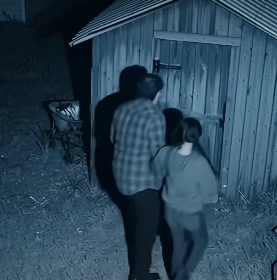
The backyard was a suburban paradise to the neighbors—manicured lawns and the distant sound of children playing—but as the screen door slammed with a metallic clang, it felt like the gate to a prison. The shed sat at the very edge of the property, a dilapidated structure swallowed by the shadows of overgrown oaks. It smelled of wet earth, gasoline, and the slow rot of neglected wood.

He threw me inside. I stumbled over a stack of old tires, the rubber cold and clammy against my skin. The single, flickering lightbulb overhead cast long, skeletal shadows across the walls.

“Stay here and think about what you cost this family,” he said, his voice cold and final.

The heavy wooden door slammed shut. I heard the slide of the exterior bolt—a sound that signaled my complete isolation. I was trapped. The air was thick with mildew, making it hard to breathe. I sank to the floor, pulling my knees to my chest, listening to his retreating footsteps and the distant sound of his truck engine roaring to life. He was leaving. He always left after these episodes, leaving me to rot until he felt “merciful” enough to let me back into my own nightmare.

But as I sat there in the dark, a tiny red ember caught my eye.

High in the corner, nestled among the cobwebs, was the security camera. He had installed it months ago after a series of neighborhood break-ins. He was obsessed with “protecting his property,” never realizing that the greatest threat was already inside the house. The camera was motion-activated. It had recorded him dragging me. It had recorded the fury. It had recorded the imprisonment.

A surge of adrenaline replaced my despair. If I could get out, if I could get to the police, I would finally have proof. No one believed me before; he was the grieving widower, the hardworking father. I was just the “troubled” daughter. But the camera didn’t lie.

I scanned the walls, my mind racing. Then, a memory surfaced, flickering like a candle in the wind.

“In case of emergencies, Elara. Our little secret.”

My mother’s voice. I was eight years old, helping her sand a birdhouse in this very shed. She had shown me a loose board in the back, hidden behind a heavy workbench. She had been a survivalist at heart, always worried about “what ifs.”

I scrambled to the back of the shed, my hands frantically moving rusted tools and old paint cans. My fingernails tore as I clawed at the workbench, pushing it aside with a strength born of pure desperation. There it was. The wood was grey and weathered, but when I pressed against the bottom, it gave way with a groan.

I pushed with everything I had. My muscles screamed, and the rough wood scraped my shoulders, but finally, the board swung outward. I squeezed through the narrow gap, the cool night air hitting my face like a blessing.

I didn’t stop to look back. I ran. I ran through the thicket of bushes, over the neighbor’s fence, and straight toward the main road.

Three hours later, I sat in the back of a police cruiser, wrapped in a shock blanket. The officers had gone to the house. They had seen the broken plate. But more importantly, they had accessed the cloud storage for the security system.

They saw it all.

They saw the moment he broke. They saw the way he looked at me—not like a daughter, but like an enemy. As they led him away in handcuffs, he didn’t look like a monster anymore. He just looked small.

I am safe now. I am staying with my aunt, and for the first time in years, the air doesn’t smell like gasoline and fear. I found the footage on the shared drive before the police locked it as evidence. I need the world to see what happens behind closed doors.

I’ve uploaded the clip of the “burden” breaking her chains.

He Fired The Nanny For Sleeping In His Bed, But Her Note… OMG

He found the new nanny sleeping in his late wife’s bed with his triplets and fired her… But the note she left behind revealed a family secret that brought him to his knees. 

James Morrison was a man who solved problems with checks. If a pipe burst, he hired the best plumber. If a stock tanked, he bought the dip. But his three sons—David, Desmond, and Daniel—were a problem money couldn’t fix.

Since his wife, Elena, had passed away two years ago, the triplets had turned into walking tempests of grief. They were only five years old, but they had already chewed through twenty-three nannies. Agencies had blacklisted the Morrison residence. The boys screamed through the night, fought during the day, and refused to let anyone but James—and barely him—get close. They were tiny, heartbroken gatekeepers to a fortress of sorrow he didn’t know how to breach.

James was exhausted. He had just flown in from a brutal week of negotiations in Tokyo, his head pounding, his bones aching. All he wanted was a scotch and the deafening silence that money afforded.

When he walked into his sprawling Boston estate, the silence was what scared him. Usually, at 10:00 PM, the house vibrated with the sounds of tantrums—crying, things breaking, feet stomping. Tonight? An unnerving stillness had settled over the marble floors.

He dropped his briefcase in the foyer. “Mrs. Chen?” he called out, but the housekeeper had likely retired to her quarters. The new nanny, Amelia, was the only one on duty. He’d only spoken to her twice via video call before hiring her out of sheer desperation. She was young, her references were oddly sparse but glowing, and she was the only person willing to take the job.

Panic, cold and sharp, pricked at his chest. He took the stairs two at a time, loosening his tie as he ran toward the boys’ room. Empty. The beds were unmade, stripped of sheets, a stuffed bear lying face down on the floor like a casualty of war.

His heart hammered against his ribs. He turned toward the master bedroom at the end of the hall—his bedroom. Elena’s bedroom. He hadn’t slept in it since she died, preferring the sterile quiet of a guest room. But he kept it exactly as she’d left it, a perfect, painful museum of their life together.

The door was ajar. A soft, rhythmic sound drifted out—a sound he hadn’t heard in two years. Peaceful, collective snoring.

He pushed the door open, ready to confront a squatter or a ghost. The sight before him stole the air from his lungs. There, in the center of his California king-sized bed—Elena’s bed—was Amelia. She was on her side, her simple brown hair fanned out on his wife’s pillow. And curled around her, tucked under her arms and pressed against her back, were his sons. David’s thumb was in his mouth, Desmond’s head was nestled in the crook of her neck, and Daniel was clutching the back of her t-shirt. They were utterly, profoundly asleep. At peace.

For a moment, wonder eclipsed his rage. It was a beautiful, tender scene, a portrait of tranquility he thought had been permanently erased from his life. But then the violation crashed over him. This was a sacred space. This stranger, this employee, had crossed a line so profound he couldn’t even articulate it. She had invaded the last sanctuary of his wife’s memory.

“Get up,” he said, his voice a low, dangerous growl.

Amelia’s eyes fluttered open. She blinked, disoriented, before panic flooded her face. She sat up carefully, trying not to disturb the sleeping boys. “Mr. Morrison. I—I’m so sorry. They wouldn’t settle. They just kept crying for… for their mommy.”

“So you decided to play house in my wife’s bed?” he snapped, the words like shards of glass.

Tears welled in her eyes. “No, it wasn’t like that. Daniel found one of her old sweaters in the closet. He said it smelled like her. They all wanted to be in here. They dragged their blankets in, and I was just trying to… to calm them. I must have fallen asleep. I’m so, so sorry.”

James’s face was a mask of stone. He saw only the transgression, not the explanation. “Pack your things. You’re fired. I want you out of this house in ten minutes.”

She didn’t argue. A look of deep, crushing heartbreak passed over her face, but she nodded. “Can I just… say goodbye?” she whispered, looking at the boys.

“No,” he said coldly. “You can go.”

She slid out of the bed with the grace of a phantom, her movements silent so as not to wake them. She gathered her meager belongings from the small room she’d been given and was at the front door in less than five minutes. Before she left, she turned back and placed a single folded piece of paper on the nightstand next to Elena’s side of the bed. Then she was gone.

The moment the front door clicked shut, as if on cue, Desmond whimpered in his sleep. Then David. Within a minute, all three were awake. The moment they realized Amelia was gone, the house exploded. It wasn’t the usual tantrum. This was a storm of pure, unadulterated grief, a wail of abandonment that clawed at the walls. They screamed her name—”Ames! We want Ames!”

For two hours, James tried everything. He offered toys, ice cream, cartoons. Nothing worked. They sobbed until they were hoarse, their little bodies trembling. Defeated, he sat on the edge of the bed that still held her faint, warm scent, his head in his hands.

His eyes fell on the note. Annoyed, he snatched it, ready to crumple it and throw it away. But the neat, slightly slanted handwriting stopped him. It was so achingly familiar. With trembling fingers, he unfolded it.

James,

You don’t know who I am, and I pray you can forgive me for that. My real name is Amelia Rojas. Elena was my older sister.

We had a falling out years ago, something stupid and childish that our parents blew out of proportion. They cut me off. Elena tried to stay in touch, but it was hard. When I heard she had passed, it broke me. I was too ashamed and scared to come to the funeral. But when I read an article about you struggling to find care for her boys—my nephews—I knew I couldn’t stay away. It was my only chance to know a piece of her.

I used my mother’s maiden name to apply. I didn’t tell you because I thought you’d see me as an opportunist. I just wanted to protect them. To love them.

Tonight, they were inconsolable. Daniel found one of Elena’s cardigans. He said, “Smells like Mommy.” They all wanted to be where her scent was strongest. They fell asleep in her bed listening to the lullaby she and I used to sing as kids. I never meant to disrespect her memory. I was just trying to bring a little piece of her back for her sons.

Please, don’t be angry with them. They are just three little boys who miss their mother more than words can say.

I love them. I’m so sorry.

Yours, Amelia.

The paper slipped from James’s numb fingers. The world tilted on its axis. Amelia. Lia. The rebellious younger sister Elena used to tell stories about with a mix of frustration and fierce love. The pieces clicked into place—the familiar handwriting, the instant connection she’d had with the boys, the lullaby he’d faintly heard her humming on the baby monitor.

He looked at his sons, their faces blotchy and tear-streaked, still crying for the woman he had just thrown out into the night. He hadn’t just fired a nanny. He had fired their aunt. He had severed the last living link his sons had to their mother.

A guttural sob escaped his throat, and his legs gave out. James Morrison, the man who could fix anything with a check, collapsed to his knees on the floor of his wife’s bedroom, utterly broken. He hadn’t just been managing his sons’ grief; he had been running from his own. And in his blind, selfish pain, he had pushed away the one person who truly understood.

With a desperate roar of purpose, he scrambled to his feet. He called the agency, but they had no forwarding address. He tore through her room and found what she’d left behind: a worn copy of The Velveteen Rabbit and a faded photograph tucked inside. It was of a teenage Elena, arm slung around a gap-toothed, grinning younger girl. Lia.

He spent the next hour making calls, pulling strings, using his immense power not for business, but for family. He finally tracked down an address for an Amelia Rojas in a rundown part of the city.

He drove there himself, the Rolls-Royce looking alien on the cracked pavement. He found her sitting on the steps of a crumbling apartment building, her head in her hands.

He got out of the car, his expensive suit feeling like a costume. “Amelia,” he said, his voice raw.

She looked up, her eyes red-rimmed.

“I am so sorry,” he choked out, the words feeling inadequate. “I was wrong. I was a fool. Please. The boys… we need you. Not as a nanny. As their aunt. As family. Please, come home.”

Tears streamed down her face as she nodded.

When they walked back into the house, three little boys came barreling down the hall, screaming “Ames!” They crashed into her, a tangle of limbs and relieved sobs. Amelia sank to the floor, wrapping them in her arms. And for the first time in two years, James Morrison knelt down and joined the embrace, finally ready to start healing his broken family.

The Most Hilarious “Domestic Dispute” Ever Caught On Camera

This orangutan thought he’d found his soulmate through the glass… But his “wife” was watching from the shadows with a very different plan.


The humidity of the primate pavilion at the Riverside Sanctuary always felt like a heavy blanket, but for Elena, it was the smell of home. A wildlife photographer who had spent years capturing the unspoken languages of the natural world, she found a strange peace in the watchful eyes of the great apes. On this particular Tuesday, the light was filtering through the skylights in dusty golden beams, illuminating the enclosure of the Bornean orangutans.

At the center of the exhibit was Barnaby. Barnaby was a massive, shaggy-haired male with a reputation for being a bit of a showman. He wasn’t like the other males who spent their afternoons lethargically peeling fruit or napping in the high hammocks. Barnaby was a people-watcher. He studied the tourists with a clinical intensity that often made them feel like they were the ones on display.

Elena approached the thick, reinforced glass, her camera hanging loosely around her neck. She wasn’t looking for a shot today; she was just looking for a connection. As she pressed her palm against the cool surface of the partition, Barnaby swung down from a thick hemp rope with surprising grace. He landed softly on the mulch-covered floor and waddled toward her, his long, rust-colored hair flowing like a tattered silk robe.

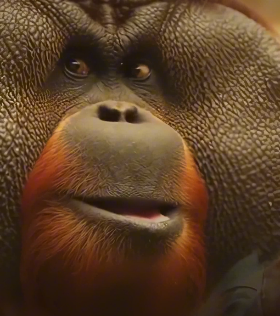
He stopped just inches from her, his deep brown eyes locking onto hers. There was a spark of something undeniably mischievous in his gaze. Elena smiled, and to her surprise, Barnaby mirrored the expression, his leathery lips curling back. Then, in a move that could only be described as a primate attempt at a “pickup line,” Barnaby leaned his face against the glass, narrowed his eyes playfully, and slowly stuck out his long, pink tongue.

He moved it from side to side, blinking rhythmically, his entire demeanor shifting into one of exaggerated, goofy romance. A small crowd began to gather, whispering and giggling at the “flirting” ape. Elena laughed, her heart warming at the sheer absurdity of the moment. It was a rare, pure bridge between two species—a moment of shared humor and lightheartedness.

But behind Barnaby, lurking in the shadows of a large artificial hollow log, was Matilda.

Matilda was the matriarch of the group—older, wiser, and significantly less interested in human interaction. She had been Barnaby’s companion for over a decade, a partnership built on shared meals and mutual grooming. For the last five minutes, she had been watching Barnaby’s antics with a growing sense of irritation. To Matilda, the “tongue-out” gesture wasn’t a cute trick; it was embarrassing behavior from a male who should have known better.

As Barnaby continued his romantic display, leaning even closer to the glass and closing his eyes as if waiting for a kiss from the beautiful human stranger, Matilda moved. She didn’t make a sound. She didn’t hoot or beat her chest. She simply glided across the enclosure with the stealth of a jungle predator.

The crowd gasped. Elena saw Matilda approaching in the reflection of the glass, but Barnaby was too lost in his “romantic” performance to notice. Just as Barnaby let out a soft, huffing sound of affection, Matilda reached out a long, powerful arm.

WHACK.

With the precision of an angry schoolteacher, Matilda delivered a stinging, open-palm smack to the very back of Barnaby’s head.

The sound of the impact echoed in the enclosure. Barnaby’s head snapped forward, his tongue retracting instantly as his eyes bugged out in total shock. The sheer force of the “reality check” sent him stumbling a step forward toward the glass. Matilda didn’t stop there; she gave him a stern, guttural grunt—the primate equivalent of “Get your act together and come eat your kale”—and turned her back on him, walking away with an air of immense dignity.

Barnaby stood frozen for a second, his “cool guy” persona completely shattered. He looked at Elena, then at the laughing crowd, and finally at the retreating form of his formidable partner. With a sheepish look that transcended species, he rubbed the back of his head, let out a long sigh, and slowly retreated toward the climbing structures, his shoulders slumped in defeat.

The pavilion erupted in laughter. Elena leaned against the glass, clutching her stomach as she doubled over. It was a reminder that no matter the species, no one is ever truly the boss when their significant other is watching. The “romantic” moment had ended in a domestic dispute, and the “king of the swingers” had been thoroughly humbled by the queen of the sanctuary.

Primate Love Triangle? The Moment A Jealous Ape Ruined Everything!


This orangutan thought he’d found his soulmate through the glass… But his “wife” was watching from the shadows with a very different plan.


The humidity of the primate pavilion at the Riverside Sanctuary always felt like a heavy blanket, but for Elena, it was the smell of home. A wildlife photographer who had spent years capturing the unspoken languages of the natural world, she found a strange peace in the watchful eyes of the great apes. On this particular Tuesday, the light was filtering through the skylights in dusty golden beams, illuminating the enclosure of the Bornean orangutans.

At the center of the exhibit was Barnaby. Barnaby was a massive, shaggy-haired male with a reputation for being a bit of a showman. He wasn’t like the other males who spent their afternoons lethargically peeling fruit or napping in the high hammocks. Barnaby was a people-watcher. He studied the tourists with a clinical intensity that often made them feel like they were the ones on display.

Elena approached the thick, reinforced glass, her camera hanging loosely around her neck. She wasn’t looking for a shot today; she was just looking for a connection. As she pressed her palm against the cool surface of the partition, Barnaby swung down from a thick hemp rope with surprising grace. He landed softly on the mulch-covered floor and waddled toward her, his long, rust-colored hair flowing like a tattered silk robe.

He stopped just inches from her, his deep brown eyes locking onto hers. There was a spark of something undeniably mischievous in his gaze. Elena smiled, and to her surprise, Barnaby mirrored the expression, his leathery lips curling back. Then, in a move that could only be described as a primate attempt at a “pickup line,” Barnaby leaned his face against the glass, narrowed his eyes playfully, and slowly stuck out his long, pink tongue.

He moved it from side to side, blinking rhythmically, his entire demeanor shifting into one of exaggerated, goofy romance. A small crowd began to gather, whispering and giggling at the “flirting” ape. Elena laughed, her heart warming at the sheer absurdity of the moment. It was a rare, pure bridge between two species—a moment of shared humor and lightheartedness.

But behind Barnaby, lurking in the shadows of a large artificial hollow log, was Matilda.

Matilda was the matriarch of the group—older, wiser, and significantly less interested in human interaction. She had been Barnaby’s companion for over a decade, a partnership built on shared meals and mutual grooming. For the last five minutes, she had been watching Barnaby’s antics with a growing sense of irritation. To Matilda, the “tongue-out” gesture wasn’t a cute trick; it was embarrassing behavior from a male who should have known better.

As Barnaby continued his romantic display, leaning even closer to the glass and closing his eyes as if waiting for a kiss from the beautiful human stranger, Matilda moved. She didn’t make a sound. She didn’t hoot or beat her chest. She simply glided across the enclosure with the stealth of a jungle predator.

The crowd gasped. Elena saw Matilda approaching in the reflection of the glass, but Barnaby was too lost in his “romantic” performance to notice. Just as Barnaby let out a soft, huffing sound of affection, Matilda reached out a long, powerful arm.

WHACK.

With the precision of an angry schoolteacher, Matilda delivered a stinging, open-palm smack to the very back of Barnaby’s head.

The sound of the impact echoed in the enclosure. Barnaby’s head snapped forward, his tongue retracting instantly as his eyes bugged out in total shock. The sheer force of the “reality check” sent him stumbling a step forward toward the glass. Matilda didn’t stop there; she gave him a stern, guttural grunt—the primate equivalent of “Get your act together and come eat your kale”—and turned her back on him, walking away with an air of immense dignity.

Barnaby stood frozen for a second, his “cool guy” persona completely shattered. He looked at Elena, then at the laughing crowd, and finally at the retreating form of his formidable partner. With a sheepish look that transcended species, he rubbed the back of his head, let out a long sigh, and slowly retreated toward the climbing structures, his shoulders slumped in defeat.

The pavilion erupted in laughter. Elena leaned against the glass, clutching her stomach as she doubled over. It was a reminder that no matter the species, no one is ever truly the boss when their significant other is watching. The “romantic” moment had ended in a domestic dispute, and the “king of the swingers” had been thoroughly humbled by the queen of the sanctuary.

He Plunged His Arm Into Freezing Water To Save A Life


A polar bear cub was moments away from a frozen grave beneath the Arctic sea ice… But a desperate team of researchers heard a sound that shouldn’t have been there.


The Arctic is a world of monochromatic silence, a place where the wind doesn’t just blow—it carves. Dr. Elias Thorne had spent twenty years studying the shifting dynamics of the Beaufort Sea, but he had never seen the ice behave quite like this. It was early spring, yet the “blue-ice” shelves were fracturing in unpredictable patterns, creating deadly traps for the creatures that called this frozen desert home.

It started as a routine survey mission. Elias and his three-person team were mapping ice density near a known migratory path. The sun hung low on the horizon, a pale, heatless disc that cast long, skeletal shadows across the ridged landscape. They were packing their gear when Sarah, the team’s youngest biologist, held up a hand.

“Stop,” she whispered. “Do you hear that?”

The team went still. At first, there was only the low hum of the wind and the distant, rhythmic groaning of the shifting plates. Then, a dull, rhythmic thud echoed from beneath their boots. It was faint—a scratching, a desperate muffled beat against the underside of the frozen shelf.

They scrambled toward a patch of translucent, frost-covered ice. As Sarah wiped away the surface snow, her breath hitched. Beneath five inches of solid, crystalline ice, a small, white shape was thrashing. It was a polar bear cub. Somehow, during a localized shelf collapse, the cub had been swept into a pocket of air beneath the surface ice as it refroze. It was trapped in a watery tomb, its oxygen running out, its small paws scraping fruitlessly against the impenetrable ceiling.

“Get the chisel! Now!” Elias shouted.

The team didn’t move; they flew. In the Arctic, every second is a thief. The cub’s movements were slowing. Its eyes, visible through the distorted lens of the ice, were wide with a primal, suffocating terror. It was a sight that tore through the professional detachment of the researchers.

Elias gripped the heavy steel chisel, his knuckles white against the cold metal. He knew the risk. If he struck too hard, the vibration could cause the surrounding shelf to shatter, dropping them all into the sub-zero depths. If he struck too softly, the cub would drown before he made a dent.

Clang. Clang. Clang.

The sound echoed across the tundra like a funeral bell. Shards of ice sprayed Elias’s face, cutting his skin, but he didn’t blink. With every strike, the cub’s strength seemed to ebb. Its head began to loll back into the dark water.

“Come on, little one! Stay with me!” Sarah cried out, kneeling on the ice, her gloved hands pressed against the surface as if trying to transfer her own warmth to the dying animal below.

Finally, the chisel broke through. A geyser of freezing seawater erupted from the puncture. Elias didn’t wait to widen the hole properly. He dropped the tool and plunged his bare arm into the slush, the cold biting into his bone like a million needles. He felt the coarse, sodden fur of the cub’s neck.

With a roar of effort, Elias hauled the waterlogged cub through the jagged opening. The animal was limp, a heavy weight of wet fur and fading life. They immediately wrapped it in a high-tech thermal blanket, Sarah beginning a frantic massage to stimulate circulation.

For three minutes, the only sound was the wind and the sobbing breaths of the team. Then, a cough. A tiny, shivering sneeze.

The cub’s eyes flickered open. It let out a high-pitched, warbling cry—a call for its mother.

“Look,” Sarah pointed toward the horizon.

About five hundred yards away, a massive silhouette was moving fast across the snow. The mother bear had heard the call. She was a mountain of white fur and muscle, her desperation evident in her gait. The team knew they had to move. A grateful mother bear is still a mother bear, and they were standing over her cub.

They backed away slowly, retreating to the safety of their heavy-duty snowcat. From the observation deck, they watched through binoculars as the mother reached the site. She didn’t attack. She didn’t growl. She nudged the shivering cub, licking the salt and ice from its fur, before gently picking it up by the scruff of its neck.

As the two figures disappeared into the white haze of the approaching storm, Elias looked at his trembling, frost-nipped hand. In a landscape defined by the cruelty of nature, they had just witnessed a miracle carved out of steel and hope.

The Heartbreaking Reason This Man Was Weeping In A Snowy Alleyway

The police destroyed his only shelter in the middle of a freezing blizzard… But when he returned to the alley, he found a miracle waiting in the snow.

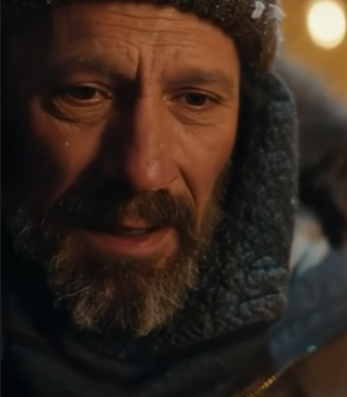
The wind in the city didn’t just blow; it bit. It was a “Silver Fang” winter, the kind that got inside your bones and refused to leave. Elias sat on a damp milk crate, his fingers tucked deep into the matted fur of Barnaby, a golden retriever mix whose age was beginning to show in the grey dusting around his muzzle. They were tucked into a narrow gap between a brick warehouse and a dumpster—a place Elias called “The Pocket.”

For three months, The Pocket had been home. It was reinforced with discarded plywood, a heavy tarp, and a collection of wool blankets found in various states of ruin. It wasn’t much, but it kept the wind off Barnaby’s joints. To Elias, that was all that mattered.

Then came the flash of blue and red.

It wasn’t a crime scene. It was a “sweep.” Officer Miller, a man Elias knew by name and who usually offered a nod of pity, stood by as two city workers began tossing the plywood into the back of a garbage truck.

“I’m sorry, Elias,” Miller said, his voice muffled by a heavy scarf. “Complaints from the new lofts across the street. We’ve got orders. You can’t stay here tonight. There’s a shelter on 4th.”

“The shelter doesn’t take dogs, Miller,” Elias said, his voice raspy from the cold. He stood up, his legs shaking. Barnaby let out a low, confused whine as his bed—a pile of old sweaters—was pitched into the crushing maw of the truck.

“I can’t help you with that, Elias. You know the rules. Move on, or we have to take you in.”

Elias didn’t fight. He didn’t have the strength. He whistled low, and Barnaby followed him out into the swirling white void of the city. They walked for hours. Every doorway was blocked by metal spikes; every park bench had an armrest in the middle to prevent lying down. The city was a fortress designed to keep him standing until he collapsed.

Unbeknownst to Elias, a pair of eyes had been watching the sweep from a warm SUV parked at the light. Maya, an eight-year-old girl with a heart too big for her chest, watched the man and his dog walk away. She saw the way the man shielded the dog from the wind with his own thin coat.

“Dad,” she whispered. “They’re going to freeze.”

Her father, Thomas, looked at the rearview mirror. He saw the despair in the man’s slumped shoulders. “I know, peanut. I know.”

That evening, while Elias and Barnaby huddle under a bridge, shivering uncontrollably, Thomas and Maya went to work. They enlisted Sarah, Thomas’s wife, and loaded their truck. They didn’t go to the shelters; they went back to the outskirts of the warehouse district, to a small, hidden alcove behind an abandoned community center that Thomas knew from his days as a contractor. It was out of sight of the street, protected by an overhanging concrete roof.

Elias eventually circled back to his old neighborhood, driven by a primal need for the familiar. He was exhausted, his toes numb, and Barnaby was limping. He turned the corner toward the community center, hoping to find a dry patch of concrete.

He stopped dead.

In the shadows of the alcove, a soft, golden light was flickering. It wasn’t a fire; it was a string of battery-operated fairy lights draped over a brand-new, heavy-duty insulated tent.

Elias rubbed his eyes, certain the hypothermia was finally causing hallucinations. But the smell hit him next—the rich, savory scent of beef stew.

He approached slowly. Outside the tent sat a large, elevated dog bed lined with a self-heating thermal pad. Next to it were two bowls: one filled with fresh water, the other with high-quality kibble topped with chunks of steak.

Barnaby didn’t wait for permission. He let out a joyful yip and dove into the food.

Elias reached for the tent flap. Inside, he found a thick sleeping bag rated for sub-zero temperatures, a crate of non-perishable food, a thermos still steaming with hot tea, and a small pile of hand warmers. There was also a note, written in the shaky, earnest handwriting of a child:

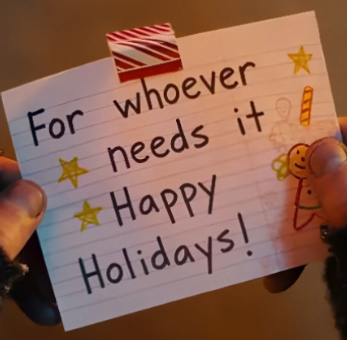
To our neighbor. We wanted you to know that you are seen. Merry Christmas. — M, T, & S.

Elias sank to his knees. The cold was still there, but the ice that had formed around his heart over years of being ignored by the world began to crack. He pulled the thermal blanket around his shoulders and wept—not for the hardship he had endured, but for the sudden, overwhelming weight of being human again.

Through the fabric of the tent, he heard the sound of a car door closing in the distance. He didn’t see the family watching from the street, but for the first time in a decade, he knew he wasn’t alone.

A Homeless Man’s Worst Night Turned Into A Christmas Miracle


The police destroyed his only shelter in the middle of a freezing blizzard… But when he returned to the alley, he found a miracle waiting in the snow.


The wind in the city didn’t just blow; it bit. It was a “Silver Fang” winter, the kind that got inside your bones and refused to leave. Elias sat on a damp milk crate, his fingers tucked deep into the matted fur of Barnaby, a golden retriever mix whose age was beginning to show in the grey dusting around his muzzle. They were tucked into a narrow gap between a brick warehouse and a dumpster—a place Elias called “The Pocket.”

For three months, The Pocket had been home. It was reinforced with discarded plywood, a heavy tarp, and a collection of wool blankets found in various states of ruin. It wasn’t much, but it kept the wind off Barnaby’s joints. To Elias, that was all that mattered.

Then came the flash of blue and red.

It wasn’t a crime scene. It was a “sweep.” Officer Miller, a man Elias knew by name and who usually offered a nod of pity, stood by as two city workers began tossing the plywood into the back of a garbage truck.

“I’m sorry, Elias,” Miller said, his voice muffled by a heavy scarf. “Complaints from the new lofts across the street. We’ve got orders. You can’t stay here tonight. There’s a shelter on 4th.”

“The shelter doesn’t take dogs, Miller,” Elias said, his voice raspy from the cold. He stood up, his legs shaking. Barnaby let out a low, confused whine as his bed—a pile of old sweaters—was pitched into the crushing maw of the truck.

“I can’t help you with that, Elias. You know the rules. Move on, or we have to take you in.”

Elias didn’t fight. He didn’t have the strength. He whistled low, and Barnaby followed him out into the swirling white void of the city. They walked for hours. Every doorway was blocked by metal spikes; every park bench had an armrest in the middle to prevent lying down. The city was a fortress designed to keep him standing until he collapsed.

Unbeknownst to Elias, a pair of eyes had been watching the sweep from a warm SUV parked at the light. Maya, an eight-year-old girl with a heart too big for her chest, watched the man and his dog walk away. She saw the way the man shielded the dog from the wind with his own thin coat.

“Dad,” she whispered. “They’re going to freeze.”

Her father, Thomas, looked at the rearview mirror. He saw the despair in the man’s slumped shoulders. “I know, peanut. I know.”

That evening, while Elias and Barnaby huddle under a bridge, shivering uncontrollably, Thomas and Maya went to work. They enlisted Sarah, Thomas’s wife, and loaded their truck. They didn’t go to the shelters; they went back to the outskirts of the warehouse district, to a small, hidden alcove behind an abandoned community center that Thomas knew from his days as a contractor. It was out of sight of the street, protected by an overhanging concrete roof.

Elias eventually circled back to his old neighborhood, driven by a primal need for the familiar. He was exhausted, his toes numb, and Barnaby was limping. He turned the corner toward the community center, hoping to find a dry patch of concrete.

He stopped dead.

In the shadows of the alcove, a soft, golden light was flickering. It wasn’t a fire; it was a string of battery-operated fairy lights draped over a brand-new, heavy-duty insulated tent.

Elias rubbed his eyes, certain the hypothermia was finally causing hallucinations. But the smell hit him next—the rich, savory scent of beef stew.

He approached slowly. Outside the tent sat a large, elevated dog bed lined with a self-heating thermal pad. Next to it were two bowls: one filled with fresh water, the other with high-quality kibble topped with chunks of steak.

Barnaby didn’t wait for permission. He let out a joyful yip and dove into the food.

Elias reached for the tent flap. Inside, he found a thick sleeping bag rated for sub-zero temperatures, a crate of non-perishable food, a thermos still steaming with hot tea, and a small pile of hand warmers. There was also a note, written in the shaky, earnest handwriting of a child:

To our neighbor. We wanted you to know that you are seen. Merry Christmas. — M, T, & S.

Elias sank to his knees. The cold was still there, but the ice that had formed around his heart over years of being ignored by the world began to crack. He pulled the thermal blanket around his shoulders and wept—not for the hardship he had endured, but for the sudden, overwhelming weight of being human again.

Through the fabric of the tent, he heard the sound of a car door closing in the distance. He didn’t see the family watching from the street, but for the first time in a decade, he knew he wasn’t alone.