A starving 12-year-old girl walked into an elite restaurant and asked for food in exchange for playing their decorative piano… When her fingers touched the keys, the entire room fell silent.
The polished grand piano in the corner of La Belle Verre hadn’t been played in years. It sat there like a museum piece—admired, photographed, but never touched. The restaurant was a temple of wealth, where reservations required connections and meals cost more than most people’s weekly groceries.
That evening, the dining room glowed with opulence. Crystal chandeliers cast dancing lights across designer dresses and bespoke suits. Conversations flowed with the easy confidence of people who’d never questioned whether they belonged anywhere.
Then Lena walked in.
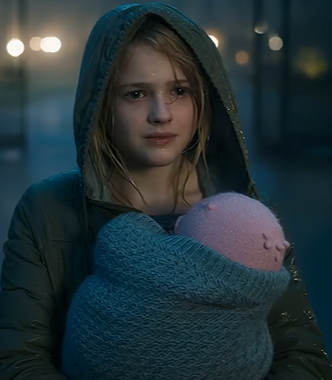
She was twelve years old, rail-thin, wearing shoes two sizes too big with soles that flapped when she walked. She moved like someone trying to be invisible, each step calculated, knowing she didn’t belong but desperate enough not to care.
She wasn’t looking at the piano. She was looking at the food.
A waiter glided past carrying a perfectly seared steak, steam rising from the plate. Lena’s throat tightened. She swallowed hard.
“This is a private event.” The voice was sharp, authoritative. A man in a charcoal suit stood before her, his expression a mixture of annoyance and suspicion.
“I’m sorry,” Lena whispered. “I just—”
“Where are your parents?”
A pause. “My mom’s working.”
Nearby, a woman in pearls leaned toward her companion. “Why do street kids always end up where they don’t belong?”
The words hit Lena like a slap, but she’d heard worse. Her eyes drifted past them, landing on the piano.
She took a step toward it.
A hand clamped on her shoulder. The restaurant manager appeared, his smile professional but cold. “That’s not a toy. You could damage it.”
Lena turned to face him. Her voice trembled, but she held his gaze. “If I play… can I eat?”
The room temperature seemed to drop.
Someone laughed nervously. Another shook his head in disbelief.
“Is this some kind of scam?” a man muttered.
The manager crouched down to her level. “Do you have any idea what that piano is worth?”
“Yes,” Lena said simply.
“Have you ever played before?”
A heartbeat of hesitation. “Only when no one’s watching.”
The manager sighed, glancing around at the curious faces now turned their way. “One minute,” he said. “Then you leave. Understand?”
Lena didn’t wait for him to change his mind.
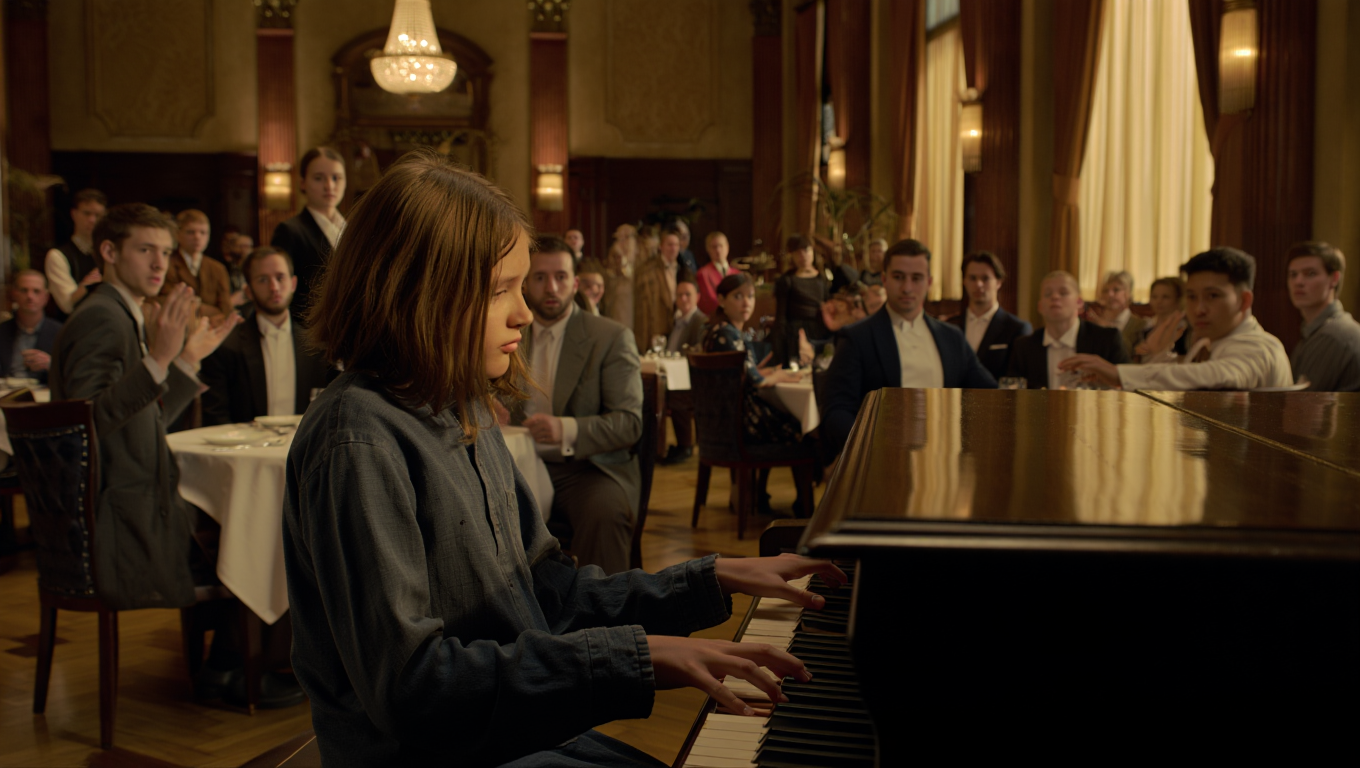
She crossed to the piano, climbed onto the bench. Her feet dangled above the floor, swinging slightly. Her fingers hovered over the ivory keys.
“This is absurd,” someone whispered.
Then she began to play.
The first note was tentative—soft, almost apologetic. Then came the second. The third.
And suddenly, it wasn’t just music anymore.
It was every cold morning she’d woken up hungry. Every night she’d pretended not to hear her mother crying in the next room. Every door that had closed in her face. Every voice that had told her she didn’t belong.
It poured out of her fingertips—raw, honest, devastating.
A woman near the bar gasped. “Oh my God…”
Forks froze mid-air. Wine glasses remained suspended. The entire room held its breath.
Lena’s hands moved with increasing confidence, faster and more powerful, drawing notes from the piano that seemed impossible from such a small frame. The melody soared and dipped, building to a crescendo that made people’s hearts ache without understanding why.
“That’s incredible,” someone breathed.
“Who taught her to play like that?”
The answer came with the final, haunting chord.
Silence.
Then a single clap.
Another.
And suddenly the room exploded in applause.
People rose from their seats. The sound thundered off the marble walls. The manager stared at Lena as if seeing her for the first time.
“Where did you learn to play like that?” he asked, his voice barely audible over the applause.
Lena shrugged. “My mom used to clean a music school. They’d let me practice after closing, before they turned off the lights.”
A woman in a burgundy dress stepped forward, pulling out the chair beside her. “Sweetheart… what’s your last name?”
“Carver.”
The woman’s face went white. She turned to the man beside her, gripping his arm.
“Did you hear that?”
His wine glass slipped from his fingers, shattering on the floor. “No… that can’t be…”
A ripple of murmurs spread through the crowd.
The woman looked at Lena, her voice cracking. “My brother’s name was Daniel Carver. He was a concert pianist. He performed all over the world.”
Lena nodded slowly. “He was my father.”
The silence that fell was heavier than before, weighted with understanding.
“He died when I was six,” Lena continued quietly. “But he always told me, ‘Talent doesn’t belong to the rich. It belongs to the brave.'”
No one spoke. No one moved.
The same man who had tried to remove her earlier stepped forward, his eyes glistening. “I’m sorry,” he said, his voice thick. “I was so wrong about you.”
The manager cleared his throat roughly. “Someone—bring her dinner. A proper meal.”
Not leftovers. Not a child’s portion. A full, beautiful meal.
Lena stared at the plate when it arrived, as if it might vanish if she blinked.
Then she smiled—a real smile that lit up her entire face.
And for the first time that night, she felt like she truly belonged.
The woman who claimed to be her aunt sat beside her, tears streaming down her face, already pulling out her phone. “We have so much to talk about,” she whispered. “Your father would be so proud.”
Lena took her first bite, and it was the best thing she’d ever tasted—not just because she was hungry, but because she’d earned it.
With courage. With talent. With the very thing her father had always believed in: the bravery to show the world who she really was, no matter how scared she felt inside.