My 8-year-old son just got his second acting job offer… But what happened next made me question everything about childhood fame.
I never thought I’d be that mom. You know the type—stage mom, pushy parent, living vicariously through their kid. But here I am, sitting in our living room, still processing what happened over the past few months, and I need to tell this story because it’s been eating at me.
It started so innocently. My son, Tommy, has always been expressive. Even as a toddler, he’d put on these elaborate performances for us—full costume changes, made-up songs, the works. When he was six, a casting director spotted him at the mall. I know how that sounds. Like the beginning of every cautionary tale about child actors. But she was legitimate, worked for a major agency, and Tommy was so excited.
His first job was a commercial for a cereal brand. Nothing huge, but the experience was magical for him. He loved every second—the lights, the cameras, the crew treating him like a little professional. He talked about it for months. We framed the check he earned (it wasn’t much, but it was his), and life went back to normal.
Then, two years later, the call came.
I was making dinner when Tommy’s agent phoned. A major streaming series was casting for a recurring role—a supporting character who’d appear in at least six episodes of the first season, with potential for more if the show got renewed. The character was perfect for Tommy: funny, smart, a little quirky. They wanted him to audition.
I watched my son’s face when I told him. His eyes went wide, his mouth fell open, and then he started jumping around the kitchen screaming. Pure, unfiltered joy. My husband and I exchanged glances, both of us smiling but also feeling that twinge of parental anxiety. Was this too much? Was he too young?
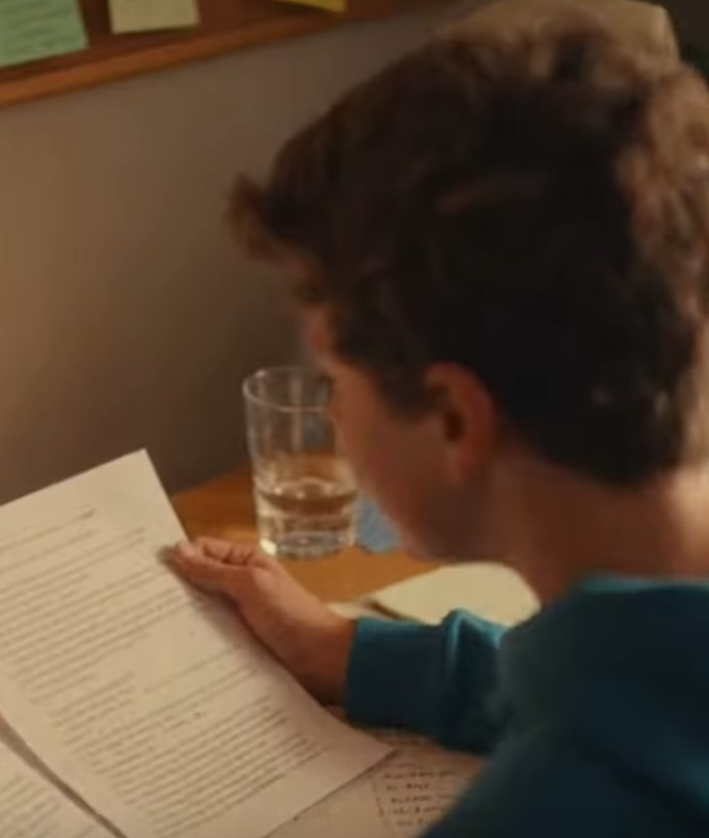
The audition process was intense. Three rounds of callbacks, chemistry reads with the adult leads, even a screen test. Tommy prepared like a tiny professional, running lines with us every night, watching videos of the show’s tone and style. He was so focused, so determined. At eight years old, he had a work ethic that put me to shame.
When the offer came, we celebrated. There were tears, hugs, excited phone calls to grandparents. Tommy wanted to invite his entire second-grade class over for a party. We let him invite his three best friends instead, and watching him tell them about his “job” was one of the proudest moments of my life.
But then reality set in.
The production schedule meant Tommy would need to miss significant school time. The producers assured us they’d provide an on-set tutor, that education was a priority, that plenty of child actors balanced both successfully. The pay was substantial—more than I made in a year—and would go straight into a trust fund for his future.
We started prep work. Table reads, wardrobe fittings, meeting with the directors. Tommy was thriving, but I noticed small changes. He started talking differently, using industry terms he’d picked up. He’d correct his little sister’s grammar like a director giving notes. He asked if we could hire a “real” acting coach instead of just practicing with us.
One night, about a week before filming was set to begin, I tucked him into bed. He looked up at me with those big brown eyes and asked, “Mom, if I’m really good at this, can it be my job forever? Like, instead of going to regular school?”
My heart sank.
I sat on the edge of his bed, stroking his hair, trying to find the right words. “Tommy, you’re eight years old. Being good at something doesn’t mean you have to do it forever. You have so much time to figure out what you want.”
“But I already know what I want,” he said, with the absolute certainty only a child can possess. “I want to be an actor.”
That’s when I started having doubts. Not about his talent—he was genuinely good. Not about the opportunity—it was legitimate and exciting. But about what we were potentially taking from him. The chance to just be a kid. To be bad at things without it mattering. To change his mind a thousand times about what he wanted to be when he grew up.
I talked to my husband that night for hours. We researched, read stories about former child actors, talked to parents in similar situations. The consensus seemed to be: it can work if you prioritize the child’s well-being over everything else. But the horror stories were there too, lurking in the background.
We decided to let Tommy make the choice himself—really make it, not just the excited “yes!” of a kid who doesn’t understand the full picture. We sat him down and explained everything: the long days, the repetitive takes, the time away from friends, the pressure to perform, the possibility that he might not enjoy it once it became work instead of play.
“What if you book this job and then realize you don’t like acting anymore?” I asked him.
He thought about it for a long moment, his face serious in a way that made him look older than his years. “Then I’ll tell you,” he said simply. “And we can stop.”
Something about that answer gave me peace. He understood, at least on some level, that this was a choice, not a destiny.
Tommy accepted the role. Filming started three weeks later.
The first day on set, I was a nervous wreck. I’d packed snacks, books, games, anything to keep him comfortable during downtime. But Tommy didn’t need any of it. He walked onto that set like he belonged there, introduced himself to everyone, found his mark, and delivered his lines with a confidence that made the director literally applaud.
I stood behind the monitors, watching my baby work, and I felt this strange mixture of pride and grief. Pride because he was incredible, truly talented, loving every second of it. Grief because I could see childhood slipping away in real-time, replaced by something more complex.
The shoot lasted six weeks. Tommy handled it better than I did. He made friends with the other young actors, charmed the crew, stayed on top of his schoolwork with the tutor, and came home every night bubbling with stories about his day. He was happy. Genuinely, radiantly happy.
But there were hard moments too. Days when he was tired and cranky and didn’t want to do another take. Times when he flubbed a line and got frustrated with himself in a way that seemed too adult, too self-critical. Once, he cried in the car on the way home because another kid actor had been “better” than him in a scene, and he was worried the directors liked the other kid more.
“Tommy,” I said, pulling over because I couldn’t drive and have this conversation at the same time, “you are eight years old. You are not supposed to worry about being better than other people at your job. You’re supposed to worry about whether you have the right colored pencils for art class.”
He looked at me with tears still on his cheeks. “But I want to be good at this, Mom.”
“You are good at this,” I assured him. “But being good at something doesn’t mean you have to be perfect. And it definitely doesn’t mean you have to be better than everyone else.”
I don’t know if he understood what I was trying to say. How do you explain to a child that success doesn’t have to come with anxiety? That passion doesn’t require perfectionism?
The show wrapped, and life returned to normal. Well, mostly normal. Tommy went back to school full-time, reconnected with friends who’d been asking where he’d been. He was still the same kid—loved video games, hated broccoli, built elaborate Lego structures that took over the living room.
But something had shifted. He carried himself differently. He was more aware of being watched, more conscious of how he presented himself. When we went out to dinner and someone recognized him from the commercials or behind-the-scenes content the show had posted, he’d light up, slip into a more performative version of himself. It wasn’t bad exactly, but it was different. He was learning to be “on.”
Then, three months after filming wrapped, the agent called again. Another offer. A feature film this time, a supporting role, four weeks of shooting, excellent pay, working with A-list actors. A dream opportunity.
Tommy was at school when the call came. I sat at the kitchen table, staring at my phone, feeling the weight of the decision ahead. Part of me wanted to say yes immediately—he’d loved the last job, he was good at it, why not? But another part of me, the part that had watched him cry about not being good enough, that had seen him lose a little piece of unselfconscious childhood, wanted to say no. To protect him from an industry that could be brutal even when it was being kind.
When Tommy came home, I told him about the offer. I watched his face carefully, looking for genuine excitement or just the conditioned response of a kid who thinks he should want this.
His eyes lit up. “Really? A movie?”
“Really,” I confirmed. “But Tommy, I need you to think about this seriously. Do you want to do this because you love acting, or because you think we want you to? Because you can say no. You can always say no.”
He thought about it while eating an apple, his legs swinging under the kitchen chair. “I want to do it,” he finally said. “But can I also stay in soccer? I don’t want to quit soccer.”
And just like that, I knew he was going to be okay. He wasn’t losing himself in this. He was just a kid who liked acting and also liked soccer and also liked building Legos. This was just one part of his life, not his entire identity.
We negotiated with the production to schedule around his soccer season. They agreed. Tommy did the movie. He was, once again, incredible.
But here’s the thing that keeps me up at night: I don’t know if we’re making the right choices. I don’t know if encouraging his talent is helping him flourish or setting him up for disappointment if the work stops coming. I don’t know if the experiences he’s gaining are worth the normalcy he’s losing. I don’t know if the money we’re saving for his future will matter if he ends up resenting us for managing his childhood like a career.
What I do know is this: Tommy is happy right now. He’s excited about acting, but he’s also excited about his science fair project and the new video game coming out next month. He has dreams about winning an Oscar someday, but he also has dreams about becoming a marine biologist or opening a restaurant that only serves dessert.
He’s still a kid. A kid with an unusual hobby and some unique experiences, but still a kid. And as long as that remains true, I think we’re doing okay.
The industry will try to take that from him—I’ve already seen the pressure, the subtle and not-so-subtle messages that he needs to be more professional, more focused, more dedicated. But every night when I tuck him in, I remind him that he’s eight years old, that he doesn’t have to know what he wants to be forever, that it’s okay to change his mind.
And every night, he hugs me tight and says, “I know, Mom. I just really like acting right now.”
Right now. Those two words give me hope. They mean he understands, on some level, that this is temporary, fluid, changeable. That he’s not locked into this path forever.
So yes, my 8-year-old son has received a second acting job offer. And yes, he’s accepted it. And yes, I’m proud and terrified in equal measure. Because I’m watching my child excel at something most adults never achieve, while also trying to protect the childhood that makes him who he is.
People ask me for advice now—other parents with talented kids, wondering if they should pursue opportunities in entertainment. I never know what to say. Every child is different. Every family is different. What works for Tommy might be a disaster for another kid.
But if I had to distill everything I’ve learned into something useful, it would be this: Let them lead. Watch them carefully. Check in constantly. Make it easy for them to say no. Protect their right to be ordinary even while celebrating their extraordinary moments. And never, ever let the industry’s timeline become more important than your child’s wellbeing.
Tommy is upstairs right now, probably building something with Legos or watching YouTube videos about sharks. In a few weeks, he’ll be on a film set again, working alongside professionals, doing something most people only dream about. But tonight, he’s just my son. And I’m going to go up there and ask him about his day at school, help him with his math homework, and tuck him in like I do every night.
Because no matter how many job offers he gets, no matter how successful he becomes, he’s still my eight-year-old boy. And my job isn’t to make him a star. It’s to make sure that whatever he becomes, he gets there as himself.