A butterfly landed on the net during the championship point… But what the player did next cost them everything.
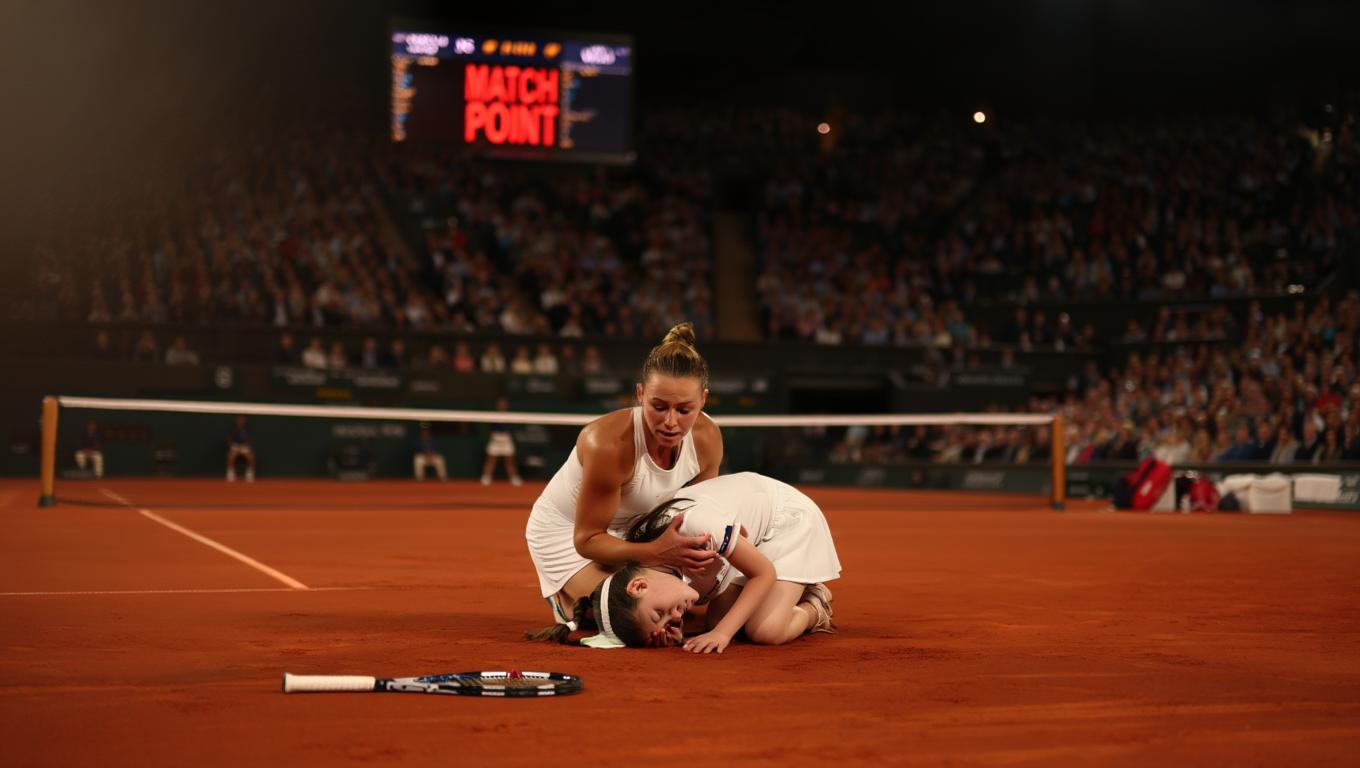
The stadium was electric. Twenty thousand people held their breath as Elena Kovač bounced the ball, preparing for what could be the most important serve of her life. Championship point. One serve away from her first Grand Slam title.
She tossed the ball high into the air—and froze.
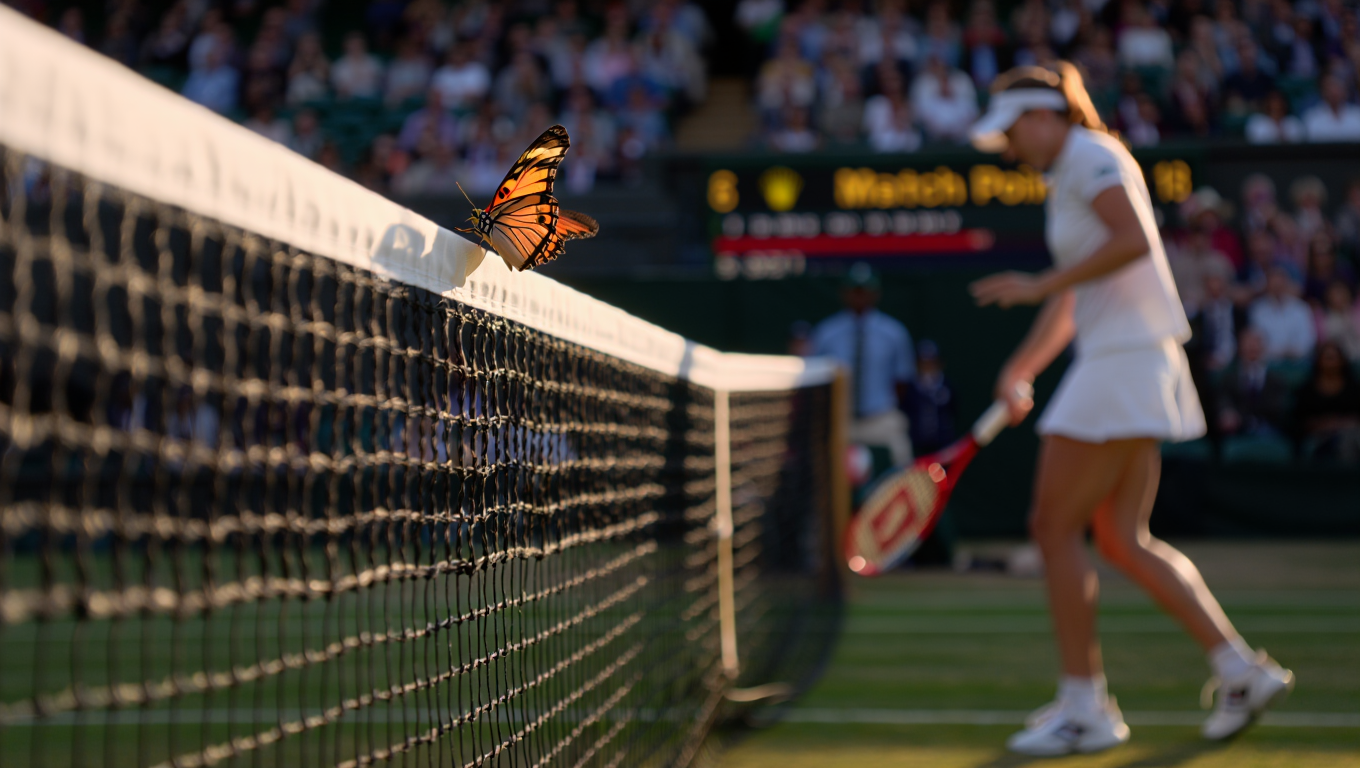
A yellow butterfly, impossibly delicate and bright against the burnt orange clay, had fluttered down from nowhere and landed precisely on the white net cord. Its wings opened and closed slowly, as if it owned the entire stadium.
Elena lowered her racket. The crowd murmured in confusion. Her opponent, Martina Santos, walked to the net, equally mesmerized. The chair umpire leaned forward, unsure of the protocol for such a moment.
“Did you see that?” Elena whispered to Martina across the net, a smile breaking across her sweat-streaked face.
Martina nodded, grinning. “Your serve. Your call.”
Elena should have waved it away immediately. Every second of delay was a second for her nerves to creep back in, for doubt to settle into her muscles. Her coach was probably having a heart attack in the box. But she couldn’t move. Something about the butterfly’s complete stillness in the chaos of this moment felt sacred.
The crowd began to laugh—not mockingly, but with genuine delight. Phones appeared. Cameras zoomed in. The butterfly’s wings caught the afternoon sunlight, creating tiny prisms of color.
“I can’t do it,” Elena said quietly. “I can’t disturb it.”
“You have to serve eventually,” Martina said, but her voice was gentle.
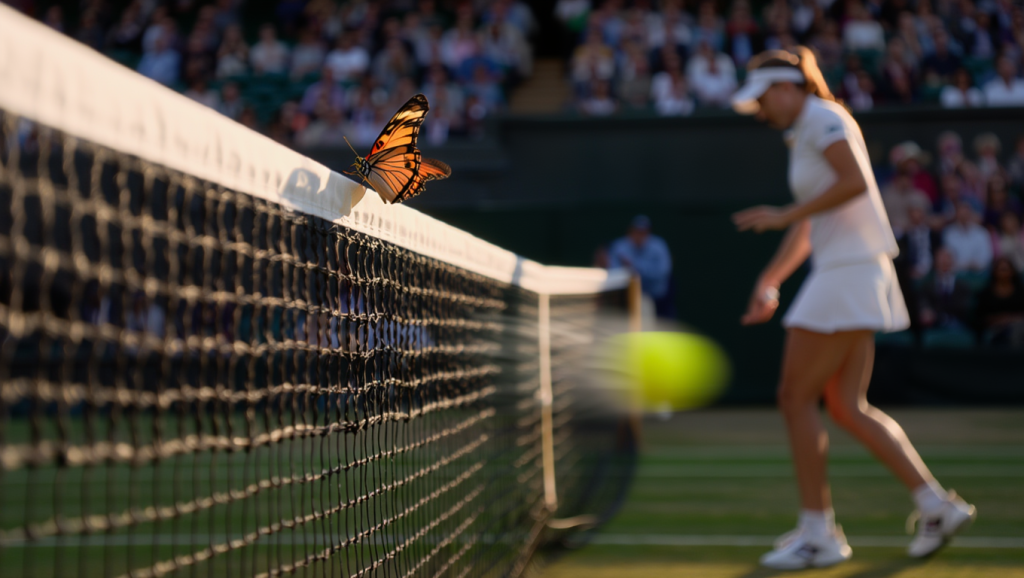
Elena approached the net carefully, her racket extended. She tapped the cord softly, three times, hoping the vibration would encourage the butterfly to leave. It didn’t move. She tried again, a little harder. Nothing.
“Come on, little one,” she whispered. “Big moment here. Give me a break.”
The butterfly finally opened its wings fully, stretched them in what seemed like deliberate defiance, and then—in its own sweet time—lifted off and floated lazily toward the stands. The crowd erupted in applause.
Elena walked back to the baseline, bouncing the ball again. But something had shifted. The intense focus she’d maintained for three hours had fractured. Her hands were shaking now. She took three deep breaths, tossed the ball, and served.
It clipped the net and fell back on her side. Fault.
Second serve. She bounced the ball four times instead of her usual two. Tossed. Connected. The ball sailed long by inches.
Double fault.
Deuce.
What followed was excruciating. Eight more deuces. Twenty-three minutes of brutal tennis. Elena’s serve, once her greatest weapon, had abandoned her completely. Four more double faults. Martina, sensing the shift, found a new level of play. She ripped a forehand winner down the line that Elena couldn’t reach.
Advantage Santos.
Then match point against Elena.
Martina’s serve was perfect. The return was late. The ball landed just wide.
Game. Set. Match. Santos.
Elena stood at the baseline for a long moment, racket hanging loose in her hand, staring at the spot where the butterfly had been. Martina was already at the net, waiting to shake hands, but there were tears in her eyes too—she knew what had just happened, understood that she’d been gifted a victory that might have gone the other way.
They embraced at the net for longer than usual.
“I’m sorry,” Martina whispered.
“Don’t be. You earned it at the end,” Elena said, and she meant it.
In the press conference afterward, Elena was asked about the butterfly moment seventeen times. She smiled through every question.
“Did it cost you the match?” one journalist asked bluntly.
Elena considered this. “Maybe. Probably. But I don’t regret it. There was something about that moment—this tiny, fragile thing landing in the middle of all this intensity, all this pressure. It reminded me why I fell in love with tennis in the first place. Not for championships or trophies, but for moments of beauty. Of connection. Of being fully present.”
“So you’d do it again?” another reporter pressed.
“Every single time,” Elena said without hesitation.
The clip went viral within hours. Not the final point, but the butterfly moment. Within three days, it had been viewed four hundred million times. Artists created paintings of it. Poets wrote verses about it. A composer in Vienna wrote a string quartet inspired by it.
Elena became more famous for losing gracefully than she might have for winning ruthlessly.
Six months later, she won the French Open, her first Grand Slam. During the trophy ceremony, she dedicated it to “the butterfly that taught me to breathe.”
But she never forgot that afternoon on the clay court when a creature with wings the size of flower petals stopped the world and reminded twenty thousand people—and one tennis player who desperately needed to hear it—that some moments are more important than victory.
Years later, Elena would tell her daughter about that match. About standing at championship point and choosing stillness over aggression, wonder over ambition.
“Did you ever regret it?” her daughter asked.
Elena smiled. “Not for a second. I lost that match, but I found something more important. I found myself again. And besides,” she added with a wink, “butterflies are good luck. That one was just making me wait for mine.”