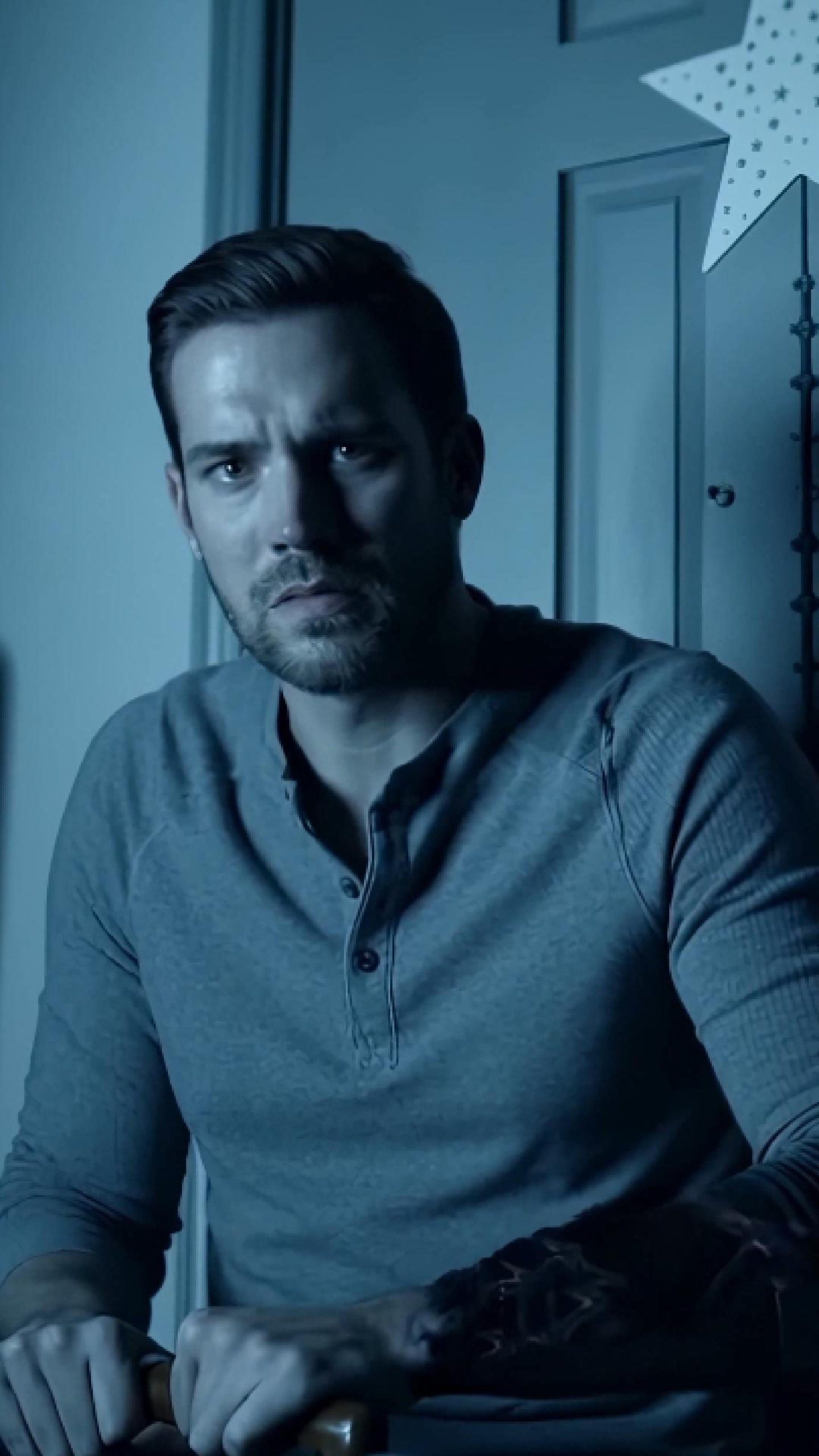
The air in the Oakridge High cafeteria always smelled of stale floor wax and overcooked pizza, but today, it tasted like tension. Leo Vance walked through the double doors with the practiced swagger of a man who owned the building. He didn’t just walk; he occupied space, his shoulders broad, his varsity jacket a suit of armor that signaled his status as the apex predator of the senior class. Behind him trailed his usual shadows, Marcus and Toby, two boys who lived off the scraps of Leo’s reflected glory.
In the corner, submerged in the shadows of a large potted fern, sat Sofia. To the rest of the school, Sofia was a footnote. She was the girl who never raised her hand, the girl who wore oversized hoodies regardless of the temperature, and the girl who seemed to vanish the moment the final bell rang. She was a “ghost,” a non-entity in the brutal social hierarchy that Leo sat atop.
Leo was bored. Boredom, for a boy like Leo, was a dangerous thing. He scanned the room, looking for a spark, a moment of dominance to reassert his reign. His eyes landed on Sofia. She was reading a tattered paperback, her noise-canceling headphones clamped firmly over her ears, her world reduced to the ink on the page and whatever melody was playing in her ears. Her peace was an insult to him. It was a vacuum he felt compelled to fill with noise.
“Watch this,” Leo smirked to his lackeys.
He approached her table with the heavy, rhythmic tread of a hunter. He didn’t say a word at first. He simply reached out and swiped her sandwich off the table. It hit the floor with a dull thud, the contents spilling across the linoleum. The cafeteria went quiet. The chatter died down as students turned their heads, sensing the familiar scent of a public execution.
Sofia didn’t scream. She didn’t look up in shock. She slowly closed her book, marking the page with a thin strip of paper. She leaned down, picked up the ruined sandwich, and placed it back on the plastic tray. Her movements were fluid, devoid of the frantic energy Leo expected.
“Hey, Ghost. I’m talking to you,” Leo barked, though she clearly couldn’t hear him through the headphones. He reached out and swiped her book off the table next. “Is this what you do? Read about people who actually have lives?”
Sofia sighed. It was a soft, weary sound—not of fear, but of profound annoyance. She reached up and pulled her headphones down around her neck. “Leo,” she said, her voice surprisingly steady. “Go away. You’re being a cliché.”
The “cliché” comment hit harder than a physical blow. The surrounding students stifled laughs. Leo’s face flushed a deep, angry crimson. He didn’t like being the punchline. He stepped closer, entering her personal space, his shadow looming over her small frame.
“You think you’re better than me?” Leo hissed, leaning in. “You think because you’re quiet, you’re special? You’re nothing. You’re a shadow I could step on and nobody would notice.”
He reached out, his large hand gripping her shoulder. He intended to squeeze, to force her to her knees, to break that infuriating composure. He wanted to see her eyes well up with the tears that fed his ego.
He felt the fabric of her hoodie beneath his palm. He felt the bone of her shoulder. And then, the world tilted.
In a blur of motion that the human eye could barely register, Sofia’s hand came up. She didn’t push him. She pivoted. Her movements weren’t the frantic flailing of a scared girl; they were the precise, calculated mechanics of a machine. She grabbed Leo’s wrist with a grip that felt like a steel vice. With a sharp, technical twist of her hips, she leveraged his own momentum and weight against him.
The sound that left Leo’s throat wasn’t a war cry. It was a high-pitched, strangled yelp.
A second later, the “King of Oakridge” was no longer standing. He was flat on his back, the air driven out of his lungs with a violent woof. Sofia followed him down, dropping her weight with surgical precision. Before Leo could even blink away the stars in his vision, he was pinned. Sofia’s knee was pressed firmly into his solar plexus, and his arm was locked behind his back in a position that screamed of impending structural failure.
The silence in the cafeteria was now absolute. Even the lunch ladies had stopped scooping mashed potatoes.
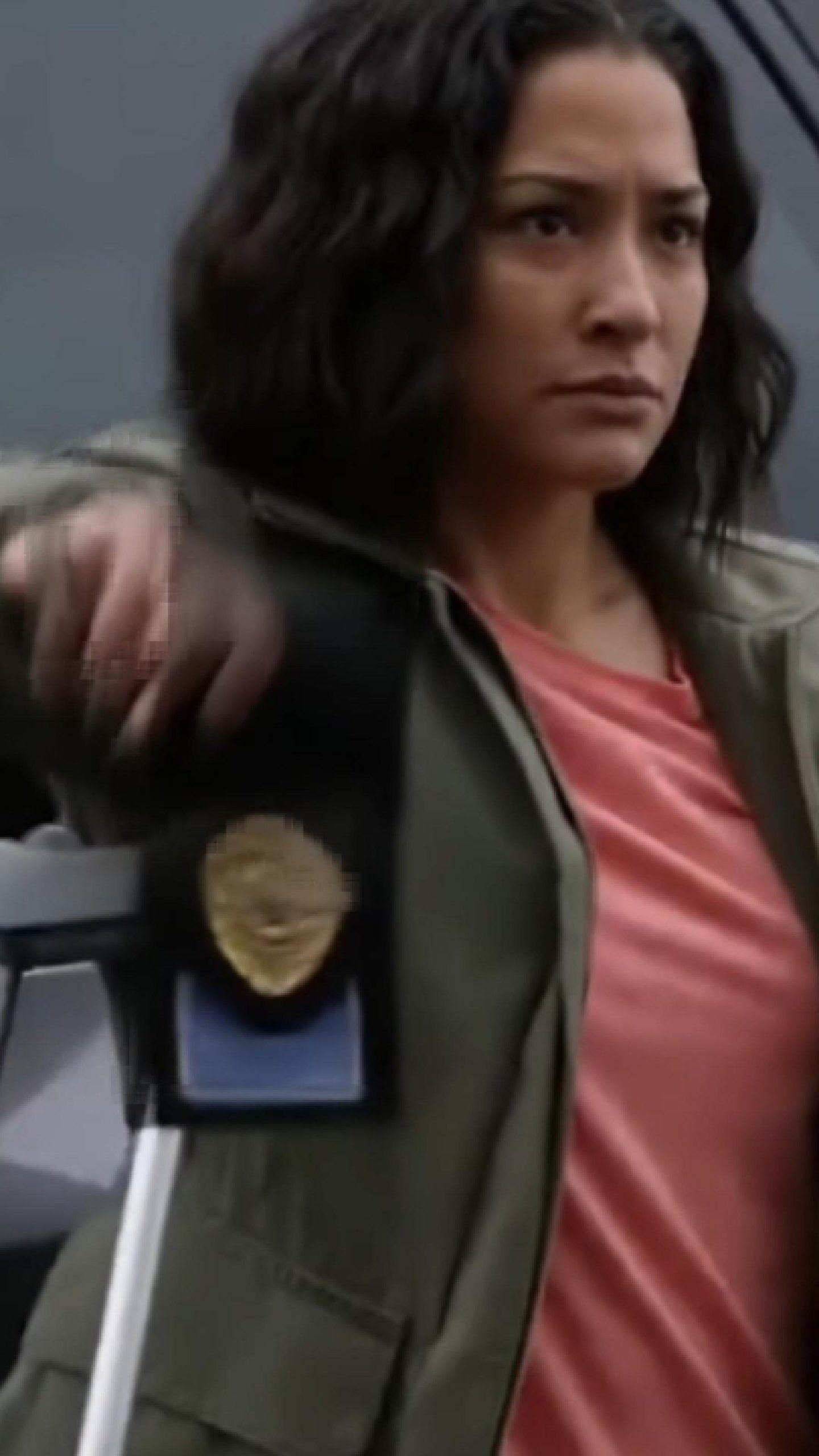
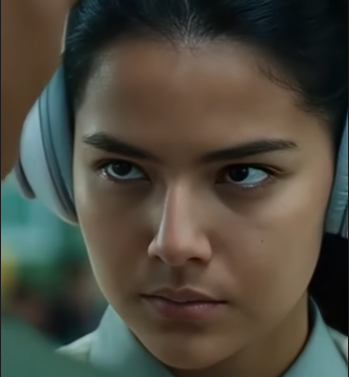
Sofia’s headphones lay on the floor beside them. Her hair had fallen forward, framing a face that was no longer “ghost-like.” It was cold. It was focused. It was the face of someone who had spent thousands of hours on a mat, someone who had been raised by a father who taught elite close-quarters combat for the special forces.
“Ten seconds, Leo,” she whispered, her voice carrying in the dead-quiet room. “That’s how long it took for you to lose everything you thought you were.”
Leo struggled, but the more he moved, the more the pressure on his shoulder increased. Tears of genuine pain leaked from the corners of his eyes. The “predator” was trembling.
“My father told me never to use this at school,” Sofia continued, her voice devoid of malice, which made it even scarier. “He said people like you aren’t worth the paperwork. He said bullies are just broken things looking for attention. But you touched me. Don’t ever touch me again.”
She didn’t wait for an apology. She knew he was too humiliated to give one. She simply released the lock and stood up in one smooth motion. She picked up her book, wiped a speck of dust off the cover, and put her headphones back on.
As she walked toward the exit, the crowd parted like the Red Sea. No one spoke. No one mocked. They just watched.
Leo stayed on the floor for a long time, staring at the ceiling tiles. He wasn’t just hurting physically; the invisible crown he’d worn for years had been shattered into a million pieces. The “Ghost” hadn’t just defended herself; she had rewritten the rules of the school in ten seconds flat.
From that day on, Sofia was still quiet. She still sat in the corner. But she was no longer a ghost. She was a legend. And Leo? Leo learned that the loudest person in the room is rarely the most dangerous.