
My ex-Marine father disowned me for dating a “weak” gamer… But he had no idea that the “loser” he kicked out was the only person capable of saving his life.
The sound of silverware clinking against china was the only thing filling the silence in the dining room, but inside my head, it sounded like a jackhammer.
I looked across the table at Arthur. He was trying so hard. He was sitting up straight, wearing the tie I’d bought him, carefully cutting his steak the way my mother had taught me. But I could see the sweat beading on his hairline. His hand trembled slightly as he lifted the fork.
Then, I looked at my dad. Frank “The Tank” Miller. Retired Marine. Retired construction foreman. A man who measured worth in calluses and horsepower. He wasn’t eating. He was staring at Arthur like a wolf studying a wounded rabbit.
“So,” Dad grunted, his voice like gravel in a mixer. “Chloe tells me you work with… computers.”
Arthur swallowed hard. “Yes, sir. I’m a cybersecurity analyst. I mostly work on preventing data breaches for—”
“Video games,” Dad interrupted, a smirk curling his lip. “She said you play video games.”
“I… well, yes, in my spare time. But my job is—”
“Spare time,” Dad scoffed, dropping his fork. It clattered loudly. “When I was your age, I didn’t have spare time. I was building bridges. I was carrying eighty-pound packs twelve miles before breakfast. Let me see your hands, son.”
“Dad, stop,” I whispered, my stomach turning.
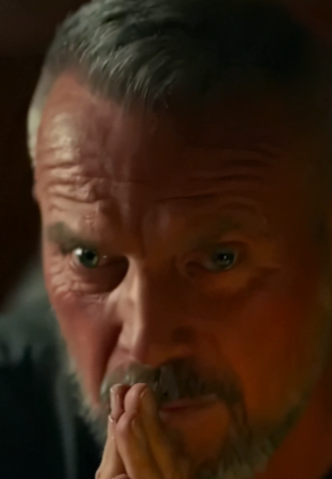
“I said, let me see your hands,” Dad commanded.
Arthur hesitated, then slowly extended his hands over the centerpiece. They were pale, slender, and smooth. The hands of a pianist, or a coder.
Dad laughed. It was a cruel, barking sound. “Soft. Marshmallow soft. You’ve never done a day of real work in your life, have you? Can you change a tire? Can you throw a punch? Can you protect my daughter if someone kicks down the door?”
“I love Chloe, sir,” Arthur said, his voice quiet but steady. “I take care of her.”
“You couldn’t take care of a goldfish,” Dad spat, standing up. He loomed over the table. “Chloe, I told you I wanted you to bring home a man. Not a boy who needs a nightlight. This is an insult.”
“Frank, please,” my mom pleaded from the other end of the table, looking terrified.
“No!” Dad slammed his fist on the table. The wine glasses jumped. “I’m done watching you throw your life away on losers. He leaves. Now. And if you go with him, don’t bother coming back. No daughter of mine is going to marry a coward.”
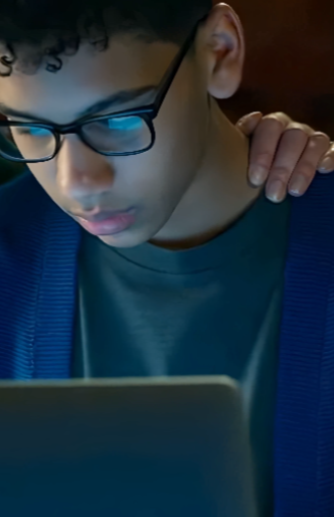
I stood up, my legs shaking. I looked at Arthur, who looked humiliated, his face burning red. Then I looked at my father—a man I had worshiped my whole life, a man who taught me how to fish and how to drive, now twisted by a toxic pride I couldn’t understand.
“Grab your coat, Arthur,” I said, my voice cracking.
“If you walk out that door, Chloe,” Dad warned, his face purple, “you’re out of the will. You’re out of this family. You’re dead to me.”
I grabbed Arthur’s hand. It was warm and firm. “Then I guess I’m an orphan.”
We walked out. I didn’t look back.

Three years went by.
Three years of silence. I sent Christmas cards; they came back “Return to Sender.” I called on birthdays; it went straight to voicemail. Mom would sneak call me sometimes from the grocery store, whispering updates, but she was too afraid of Dad’s wrath to visit.
Life with Arthur was wonderful, though different from how I was raised. He didn’t fix the sink with a wrench; he hired a plumber. He didn’t hunt for dinner; he ordered Thai food. But he was kind. He listened. And he was brilliant. He launched a startup that focused on forensic accounting and digital asset protection. We weren’t just comfortable; we were thriving.
But there was always a hole in my heart where my father used to be.
Then, the call came.
It was Mom. She wasn’t whispering this time. She was sobbing.
“Chloe, you have to come. It’s your father.”
“Is he… is he sick?”
“No. It’s worse. He’s going to lose everything. The house, the truck, the pension. Everything.”
I drove over immediately. Arthur insisted on driving me, though I told him to stay in the car. I didn’t want him subjected to more abuse.
When I walked into my childhood home, it felt like a funeral. The house was dark. Boxes were half-packed in the hallway. Dad was sitting at the kitchen table, his head in his hands. He looked twenty years older. The “Tank” had crumbled.
“What happened?” I asked.
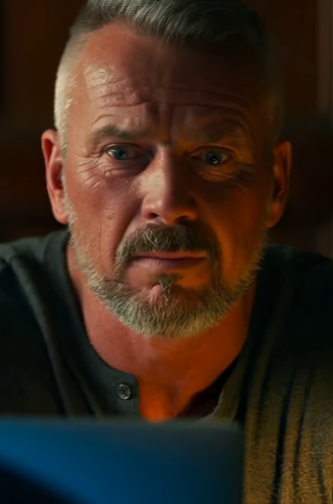
Dad didn’t look up. Mom answered, wiping her eyes with a tissue. “A scam. An investment scam. Someone called him, pretended to be his old unit commander. Said there was a private contractor opportunity. Dad transferred… everything. His savings, the equity from the house… almost $400,000.”
“I went to the police,” Dad whispered, his voice broken. “They said the money is in an offshore account. Untraceable. Gone.”
He looked up at me, his eyes red-rimmed and watery. “I’m a fool, Chloe. I thought I was being smart. I thought I was providing. Now I can’t even put a roof over your mother’s head.”
For the first time in my life, I saw fear in my father’s eyes. Not the adrenaline of combat, but the cold, crushing fear of helplessness. The strong man, the protector, had been defeated by an invisible enemy he couldn’t punch or shoot.
“Let me make a call,” I said.
I went out to the driveway. Arthur was waiting, typing on his laptop.
“They lost everything, Arthur. It was a wire fraud scam.”
Arthur closed his laptop. He didn’t look smug. He didn’t say ‘I told you so.’ He just asked, “Do they have the transaction logs?”
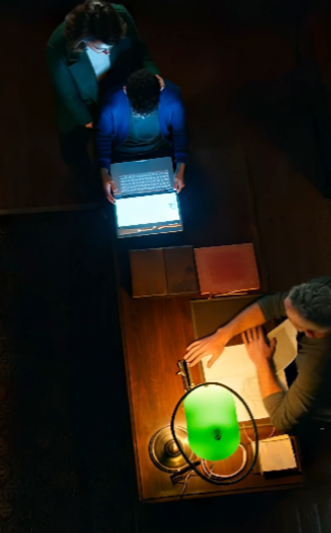
“I think so.”
“Bring me inside.”
“Arthur, he—”
“Chloe. Bring me inside.”
We walked in. Dad stiffened when he saw Arthur. Even at his lowest, the prejudice was there. “What is he doing here? Here to laugh at the old man?”
Arthur ignored him. He sat down at the table, opened his laptop, and cracked his knuckles. “Mr. Miller, I need the routing numbers and the emails you exchanged with them. Now.”
Dad blinked, confused by the authority in Arthur’s voice. “It’s gone, kid. The police said—”
“The police deal with jurisdiction. I deal with code. Give me the laptop.”
For the next four hours, the kitchen was silent except for the furious clacking of Arthur’s keyboard. Dad sat there, watching the “weakling” work. Arthur was in a trance—screens of cascading code, maps appearing and disappearing, command prompts flashing green and black.
“Got you,” Arthur muttered.
“What?” Dad asked, leaning in.
“They used a double-blind VPN, but they got lazy with the packet encryption on the third hop,” Arthur said, speaking a language Dad didn’t understand. “They aren’t in Nigeria. They’re in Florida. And they haven’t washed the money yet. It’s sitting in a holding account pending a crypto conversion.”
Arthur picked up his phone. “I’m calling a contact at the FBI Cyber Division. I did some consulting for them last year. If we freeze the asset now, we can claw it back.”
Dad watched, mouth agape, as Arthur—the man with the “marshmallow hands”—commanded the attention of federal agents on the phone. He gave them coordinates, IP addresses, and hash keys. He was ruthless. He was precise. He was a weapon.
Two days later, the money was back in Dad’s account.
We were standing on the porch. The moving boxes were being unpacked.
Dad walked out. He looked at Arthur, really looked at him, for the first time. He looked at the soft hands that had just pulled his entire life out of a fire.
“I can’t pay you,” Dad said gruffly.
“I didn’t do it for money,” Arthur replied, closing his laptop bag. “I did it because you’re family. Whether you like it or not.”
Dad looked down at his own calloused hands, then at Arthur’s. He took a deep breath, his pride fighting a losing battle with his gratitude.
“I said you couldn’t protect her,” Dad said, his voice thick. “I said you were weak because you couldn’t fight like me.”
“I can’t fight like you, Frank,” Arthur said. “But the world has changed. The wolves don’t come to the door anymore. They come through the wires. And in that world? I’m the tank.”
Dad let out a breath that sounded like a laugh, or maybe a sob. He extended his hand.
“Thank you,” Dad said.
Arthur shook it. Dad didn’t squeeze too hard this time.
“Come inside,” Dad said, stepping back to hold the door open. “I bought steaks. And… Arthur? You can teach me how to set up that firewall thing.”
“Sure, Frank,” Arthur smiled. “But first, show me how to sharpen a knife properly.”