Category Archives: USA Storytime

The Most Satisfying Christmas Dinner Freakout You Will Ever Read


My aunt forced me to scrub the floor while the family ate Christmas dinner… But she didn’t expect the billionaire she betrayed to walk in and flip the table.


The smell of roast turkey and sage stuffing usually makes a house feel like a home. But from down here, on the cold hardwood floor, all I could smell was lemon bleach and the dirty gray slush melting off my cousin’s boots.

“You missed a spot, Maya,” Aunt Linda said.

Her voice wasn’t loud. It never had to be. It was that sickly sweet tone she used when she wanted to twist the knife, the kind of voice that sounded like a lullaby but felt like a suffocating pillow.

I tightened my grip on the gray rag, my knuckles turning white, skin chapped and raw from the harsh chemicals. “I’m getting it, Aunt Linda.”

“Well, get it faster. The Guests will be here in twenty minutes for dessert, and I won’t have this place smelling like a kennel.” She took a long, languid sip of her Pinot Noir, her red sequined dress shimmering under the chandelier lights like the scales of a well-fed snake.

My knees were screaming. I had been cleaning since four in the morning—scrubbing the grout in the bathrooms, ironing the guest linens, de-icing the long driveway, and now, the dining room floor. While they sat at the mahogany table, passing the mashed potatoes and laughing, I was on my hands and knees, scrubbing away a spot of cranberry sauce my cousin Jessica had “accidentally” dropped. I had watched her do it. She had looked right at me, smirked, and let the spoon tip over.

“Mom, leave her alone,” Jessica giggled, tearing off a piece of a buttery roll. “She likes it. It’s the only way she earns her keep, right? Since she dropped out of college.”

My chest tightened, a hot lump forming in my throat. I didn’t drop out. Aunt Linda had drained my tuition fund—money my mother had left specifically for me—to pay for “essential home repairs.” Those repairs coincidentally looked a lot like a heated saltwater pool and a first-class trip to Cabo. But I couldn’t say that. I had nowhere else to go. Not since Mom died. Linda was my legal guardian, and she held the deed to the house my parents had built.

“Quiet, Jess,” Linda said, though her eyes danced with amusement. “Maya knows her place. She’s just… grateful we took her in. Aren’t you, sweetie?”

I bit the inside of my cheek until I tasted copper. I looked at the floor, staring at my distorted reflection in the polished wood. “Yes, Aunt Linda.”

“Good. Now, go fetch the coffee. And use the service entrance when you come back in. I don’t want you tracking dirt on the clean floor.”

I started to push myself up, my back spasming with a dull ache, when the heavy oak front door shuddered.

Boom. Boom. Boom.
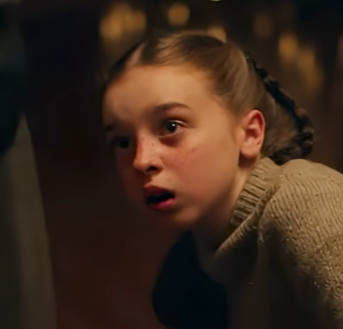
Three heavy knocks. They didn’t sound like a neighbor bringing fruitcake. They sounded like a gavel coming down on a judge’s bench.

The room went silent. The clinking of silverware stopped.

“Who on earth is that?” Linda hissed, checking her diamond watch. “The Parkers aren’t due for an hour. If that’s the carolers again, I’m calling the police.”

“I’ll get it,” I whispered, instinctively moving toward the foyer.

“Sit down!” Linda snapped, then realized I was standing. “I mean… stay out of sight. You look like a rag doll. Jessica, answer the door.”

Jessica rolled her eyes, wiped her mouth with a linen napkin, and sauntered to the foyer. I retreated into the shadows of the hallway, clutching my dirty rag to my chest like a shield.

The door creaked open. A gust of wind howled through the house, carrying snowflakes that danced in the warm foyer light.

And then, the air in the room seemed to vanish.

Standing there was a man I hadn’t seen in ten years. He was wearing a charcoal wool trench coat that probably cost more than this entire house. His hair was silver now, swept back, and his jaw was set like granite. He didn’t look like the fun uncle who used to sneak me candy and tell me ghost stories. He looked like a man who had walked through hell, bought the place, and evicted the devil.

Uncle Vance. The outcast. The billionaire tech mogul Linda claimed was “dead to us” because he refused to fund her lifestyle years ago.

Jessica froze, her hand still on the doorknob. “Um… can I help you?”

Vance didn’t even look at her. He stepped inside, his heavy boots echoing on the marble floor. He walked past Jessica as if she were a piece of furniture, ignored the garland and the twinkling lights, and walked straight into the dining room.

Aunt Linda stood up so fast her chair screeched against the floor. Her face went pale, her red lipstick suddenly looking like a garish wound. “Vance? What… what are you doing here? You weren’t invited.”

“I was in the neighborhood,” Vance said. His voice was a low rumble, vibrating through the floorboards and settling in my bones. “Checking on loose ends.”

He scanned the table. The half-eaten turkey. The expensive vintage wine. The silver platters.

Then, his eyes kept moving. Past the table. Into the shadows.

He saw me.

He saw the dirty rag in my hand. He saw my red, chapped hands, cracked from the cold and the chemicals. He saw the oversized, stained sweater I was wearing—hand-me-downs from the gardener—while everyone else was draped in silk and velvet.

He stopped. The temperature in the room seemed to drop ten degrees.

“Maya?” he asked. The hardness in his eyes cracked, just for a second, replaced by something that looked like horror.

“Hi, Uncle Vance,” I managed to choke out. My voice was small, broken.

He looked from me, down to the wet patch on the floor where I had been kneeling, and then back to Aunt Linda. His face hardened again, but this time, it wasn’t cold. It was burning. It was the look of a volcano right before the eruption.

“She’s… helping out,” Linda stammered, her voice pitching high with panic. She smoothed her dress nervously. “She’s staying with us. We’re taking care of her.”

“Taking care of her?” Vance repeated. He took a slow, deliberate step toward the table. “You’re eating a feast while my brother’s daughter scrubs the floor at your feet?”

“It’s not like that!” Linda cried, backing up until she hit the sideboard. “She has to earn her way! She has no money, Vance! She’s a burden! We feed her, we house her—”

“A burden,” he whispered.

He closed his eyes for a second, taking a deep breath. When he opened them, there was no mercy left. Only a cold, calculating rage.

“You stole her inheritance, Linda. My forensic accountants found the transfers this morning. You didn’t ‘take her in.’ You took her hostage to access the trust fund.”

The room gasped. Jessica looked at her mother, eyes wide.

“You’re right, Linda,” Vance said, his voice terrifyingly calm. “The burden ends tonight.”

Vance walked up to the head of the table. He gripped the edge of the solid oak with both hands. His knuckles popped.

“Vance, wait—” Linda shrieked, raising her hands.

With a roar that shook the walls, Uncle Vance heaved upward.

CRASH.

The entire dining table—turkey, crystal, candles, gravy boats, and all—flipped into the air.

It was chaotic and beautiful. Plates shattered against the wall in a starburst of porcelain. Gravy splattered across Linda’s sequin dress. The cousins screamed and scrambled backward as the feast turned into a pile of wreckage on the floor. A bottle of red wine smashed near Jessica’s feet, staining the rug blood-red.

Vance didn’t flinch as a glass shattered near his boot. He stood amidst the destruction, breathing hard, looking like a titan of vengeance. He pointed a finger at Linda, who was now sobbing, covered in mashed potatoes and shame.

“You have twenty-four hours to vacate this property,” Vance growled. “I bought the bank that holds your mortgage this morning. I’m foreclosing.”

He turned to me, his expression softening instantly. He extended a hand—clean, warm, and safe.

“Get your things, Maya,” he said softly. “We’re leaving. And you’re never scrubbing a floor again.”

I dropped the rag. It made a wet thwack on the floor. I didn’t look back at Aunt Linda or Jessica as I took my uncle’s hand. For the first time in years, the house didn’t smell like bleach. It smelled like freedom.


Billionaire’s Mute Son Speaks First Words to the MAID (Shocking)


The billionaire’s mute son screamed “Mom!” at the cleaning lady… But the DNA test revealed a secret that destroyed his fiancée’s life.

The grand ballroom of the Del Castillo mansion smelled of expensive champagne, freshly cut roses, and perfumes that seemed to belong not to real people, but to the very idea of perfection. A hundred guests laughed with the easy confidence of those who had never needed to look at a price tag. At the center, Alejandro held his son Santiago’s hand—Santi, para todos—and accepted congratulations on his engagement to Isabella, a woman who sparkled beside him like a precious gem, cold and sharp.

Santi, on the other hand, did not shine. He was two years old—big eyes, constantly tired, wrapped in a silence that worried doctors, therapists, and every well-meaning outsider. He had never spoken a word. Not one.
“The child just needs time,” some said.
“He needs discipline,” Isabella repeated with a flawless, plastic smile that never reached her eyes.

Alejandro listened to everything, paid for everything, bought everything… and yet, every night, when the noise faded, the same question remained: why did his son feel so distant, even when held in his arms? Why did the boy flinch when Isabella entered the room?

That night, amid music and applause, a small detail shattered the perfect scene. At the edge of the hallway, near a service door, a woman was kneeling, polishing a wax stain as if her life depended on it. A cheap uniform. A white apron marked by hard work. Yellow rubber gloves glowing under the glass lights. Her name was Elena. She had been in the house for only two weeks, and at that party, she was nearly invisible—as staff are expected to be.

Until Santi saw her.

It was an impossible moment, as if the air itself had changed. The boy let go of Alejandro’s hand with unexpected strength and ran, awkward and unsteady, straight toward Elena. Not to Isabella. Not to his father. Not to the guests trying to catch his attention with expensive toys. To the woman in the yellow gloves.

Before Alejandro could react, Santi crashed into Elena’s apron, buried his face against her chest, and screamed a single, clear, heartbreaking word—as if he had saved it his entire life for this moment.

“Mom!”

Glasses froze in midair. The orchestra lost its rhythm. The living room—so used to controlling its image—went completely still. This was not baby babble. It was a cry of recognition. A cry filled with hunger, fear, relief… and fierce certainty.

Elena stood frozen, as if the world had suddenly grown heavier. Her hands trembled. She looked at Alejandro with reddish, honey-colored eyes, silently begging for an explanation she couldn’t bring herself to ask. Then she looked at Isabella, whose face showed the expression of someone who had just watched something filthy fall onto her dress.

Isabella moved first. Her heels struck the marble with a fury that did not match her perfect body.

“Let him go right now!” she screamed—not out of concern for the child, but from the shame of seeing her party ruined.

Elena tried to back away on her knees, stammering apologies, but Santi clung to the fabric with superhuman strength. Without a trace of tenderness, Isabella grabbed the child by the arm and yanked him. Santi screamed—a sound of pain and terror that made several guests turn away.

“Daddy!” Santi cried, still refusing to let go of Elena.

Alejandro took two steps forward, stunned. His business-trained mind tried to file it away into a report, a logical explanation: manipulation, trickery, coincidence. But his chest did not obey logic. His heart obeyed the sight of his son begging for a woman who, on paper, meant nothing.

Seeing the pull, Elena instinctively raised her hands to protect Santi’s head.

“Careful—his arm hurts!” she shouted, with an authority that didn’t match her position.

That shout triggered poison.

Isabella slapped her. The sound was sharp and brutal. Elena’s face snapped to the side, and a bloody cut appeared on her lip. Santi screamed again and, in a desperate reflex, bit Isabella’s arm. She dropped the boy as if he were a wild animal.

Santi fell, but he didn’t cry from the fall. He crawled back to Elena, and Elena wrapped her body around him, shielding him as they slid back toward the salon—protecting him like a wounded lioness surrounded by elegant people who did not understand such love.

The murmurs began like a light rain… and then turned into a storm.

“Enough!” Alejandro’s voice boomed, cutting through the whispers. He didn’t look at the guests. He looked at Isabella, whose face was twisted in a mixture of pain and rage, and then at the maid on the floor, holding his son as if she had birthed him.

“Alejandro, throw this filth out!” Isabella hissed, clutching her bitten arm. “She bewitched him! She’s probably been feeding him candy or brainwashing him while cleaning his room!”

Alejandro walked past Isabella. He knelt on the expensive marble, ruining his tuxedo trousers, until he was eye-level with Elena.

“Why?” Alejandro asked softly. “Why did he call you that?”

Elena looked up, tears streaming down her face, mixing with the blood on her lip. She pulled a locket from beneath her uniform—a cheap, tarnished silver thing. She clicked it open with trembling fingers. Inside was a tiny, crumpled photo of a newborn baby.

“Because he is mine,” she whispered.

The room gasped. Isabella laughed—a shrill, nervous sound. “Don’t be ridiculous. Alejandro, you adopted Santiago from the most prestigious agency in Europe. This woman is a delusional peasant!”

“Look at the birthmark,” Elena said, her voice gaining strength. She gently rolled up Santi’s sleeve, revealing a strawberry-shaped mark near his shoulder. Then, she rolled up her own sleeve. There, on her forearm, was the exact same mark.

Alejandro stared. The adoption papers had listed the mother as ‘Unknown/Deceased.’ He turned slowly to Isabella. “You arranged the adoption. You handled the agency paperwork because you said you wanted to help me start a family before we were even engaged.”

Isabella’s face drained of color. “I… I used a broker. I didn’t know where the child came from. This proves nothing!”

“I was told my baby died during birth,” Elena sobbed, rocking Santi, who had finally stopped crying and was now asleep against her heartbeat. “I was in a clinic… a clinic she recommended for poor women,” she pointed a shaking finger at Isabella. “She came to visit the charity ward. She told me she would help me. When I woke up, they said my boy was gone. But I never stopped looking. I took jobs in every rich house in the city, hoping, praying… and two weeks ago, I saw him in the garden. I knew.”

Alejandro stood up. The temperature in the room seemed to drop ten degrees. He was known as a ruthless businessman, but those who knew him well knew his ruthlessness was reserved for liars.

“Security,” Alejandro said calmly.

Two burly men stepped forward. Isabella straightened her posture, assuming they were coming for the maid.

“Escort Isabella out,” Alejandro commanded. “And call the police. We are going to have a long conversation about human trafficking and fraud.”

“You can’t do this!” Isabella shrieked as the guards grabbed her arms. “I did it for us! You wanted an heir! I got you the best one! Who cares where it came from?”

Her confession hung in the air, ugly and undeniable.

As Isabella was dragged out, screaming and kicking, the ballroom remained silent. Alejandro looked down at Elena and his son. For the first time in two years, the boy looked peaceful. The silence that had worried the doctors wasn’t a medical condition; it was grief. He had been grieving the loss of the only warmth he knew.

Alejandro extended a hand to Elena. She hesitated, then took it. He pulled her up, careful not to disturb the sleeping boy in her arms.

“I don’t know how to fix this,” Alejandro said, his voice thick with emotion. “But you are not going anywhere. He needs you.”

Elena looked at the billionaire, then down at her son. “He doesn’t need a billionaire, sir. He just needs his mother.”

“Then he shall have her,” Alejandro replied. “And perhaps… he can have a father too, if you’ll allow me to earn that title the right way.”

Six months later, the “maid” was no longer wearing a uniform. Elena sat in the garden, watching Santi laugh—actually laugh—as he chased a ball Alejandro had kicked. They weren’t married; they weren’t rushing. They were simply building something that money couldn’t buy: a family built on truth.

Bullies Destroyed Her Shop — The Karma That Hit Them Was Instant


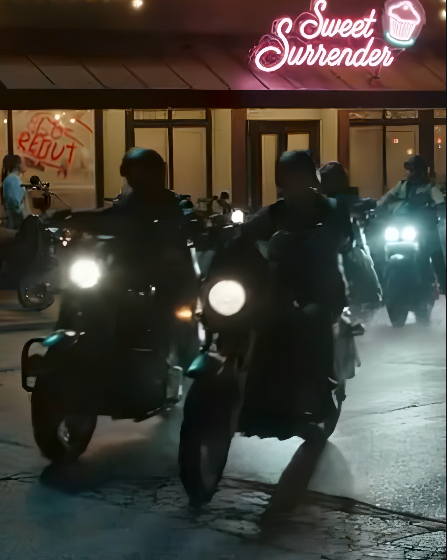
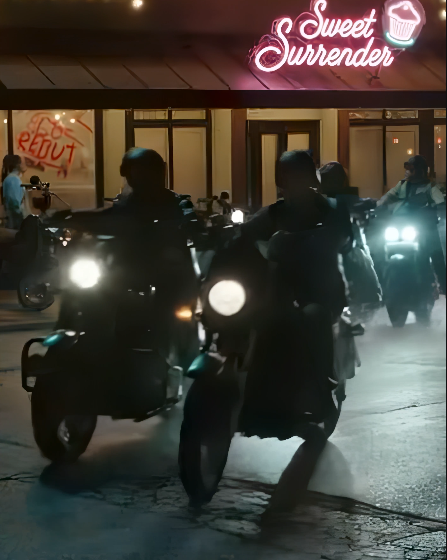
They spray-painted hateful slurs across her bakery windows to run her out of town… But when the state’s most feared biker gang surrounded the shop, the leader dropped a truth bomb that left everyone speechless.


The smell of bleach was burning my nose, but it couldn’t mask the scent of burnt sugar or the sinking feeling in my gut. My hands were raw, red, and shaking violently as I scrubbed at the glass.

Create. That’s all I ever wanted to do. Create a safe place. Sweet Surrender was my dream—my life savings, my sweat, my tears. I wanted a place where the smell of yeast and cinnamon could make people forget their problems for five minutes.

But the town of Oakhaven had a long memory and a short fuse for outsiders. especially outsiders like me.

The red spray paint was stubborn. It dripped down the glass like blood. “GET OUT,” one pane read. “FREAK,” read the other.

I dropped the sponge into the gray, sudsy bucket and leaned my forehead against the cool glass. I was done. I couldn’t fight a whole town. I was just one woman who liked to bake pies and happened to love other women. Apparently, that was a crime here.

“Shop’s closed,” I choked out, hearing the bell above the door jingle. I didn’t turn around. I couldn’t let anyone see me like this—defeated.

“That sign is crooked.”

The voice was low, laced with a gravelly timbre that vibrated right through the floorboards.

I spun around. Liam.

He was the mystery of Oakhaven. He came in every Tuesday and Thursday at 4:00 PM sharp. He ordered a black coffee and a slice of whatever came out of the oven last. He never said much. He just sat in the corner, wearing that worn-out leather jacket that looked like it had seen more road than a long-haul trucker, reading paperback thrillers.

Today, he wasn’t reading. He was standing in the center of the shop, his thumbs hooked into the pockets of his jeans, staring at the graffiti visible through the reverse side of the window.

“Liam, please,” I wiped my eyes with the back of my hand, smearing soot and tears across my cheek. “I can’t serve you today. I think… I think I’m closing for good.”

He didn’t move. He just looked at the window, his jaw tightening until a muscle feather in his cheek jumped. “Who did it?”

“Does it matter?” I laughed, a bitter, broken sound. “It’s the Hendersons. The Millers. The folks who think I’m ‘polluting’ their main street. They won.”

Liam walked over to the window. He was bigger than I usually gave him credit for. When he sat in the corner, he seemed contained. Standing here, he took up all the oxygen in the room. He reached out, tracing the backward letters of the slur on the glass.

“You pack the best damn peach cobbler in three counties, Sarah,” he said quietly.

“My cobbler isn’t going to fix hate, Liam.”

He turned to me then. His eyes, usually a guarded slate-gray, were burning. “No. Cobbler doesn’t fix hate. But it buys loyalty.”

“What are you—”

Before I could finish, the ground began to shake.

It wasn’t an earthquake. It was a rhythmic, thumping vibration that rattled the whisk hanging on the wall. A low growl started in the distance and swelled rapidly into a deafening roar. It sounded like a thunderstorm had touched down on Main Street.

I backed away from the window, terrified. “Oh god. They’re back. They brought more people.”

Liam didn’t flinch. He just walked to the front door and held it open.

“Liam, get away from there! Lock the door!” I screamed.

The roar cut off abruptly, replaced by the heavy thud of kickstands hitting pavement. Through the defaced window, I saw them. Not the beat-up pickup trucks of the local bullies.

Motorcycles. Dozens of them.

Chrome glinted in the afternoon sun. Black leather vests. Patches that I recognized from news reports—the kind of patches that made police officers call for backup. This was the Iron Vipers MC.

I was paralyzed. Why were they here? Had I offended them too?

The door swung wide, and Liam stepped out onto the sidewalk. He didn’t look scared. He looked… authoritative.

A man the size of a vending machine dismounted the lead bike. He had a gray beard that reached his chest and arms like tree trunks. This was ‘Reaper.’ Even I knew who Reaper was.

I grabbed a rolling pin from the counter, my knuckles white. I was going down fighting.

I crept toward the open door, trembling, just in time to hear Reaper bellow, “IS THIS THE PLACE?”

Liam nodded, gesturing to the paint. “This is it.”

Reaper walked up to the glass. He stared at the hate speech. He stared at the ‘CLOSED’ sign. Then, he turned his gaze to me, shivering in the doorway with my rolling pin.

The silence on the street was heavier than the noise had been. The locals—Mrs. Henderson, the Miller boys—were peeking out from the hardware store across the street, looking pale.

Reaper took off his sunglasses. He looked at Liam. “She the one?”

“Yeah,” Liam said. “That’s Sarah.”

Reaper stomped his boots on the pavement and walked straight toward me. I flinched, bracing for impact.

He stopped two feet away. He smelled like exhaust, tobacco, and rain.

“You make the Apple Crumb?” he grunted.

I blinked, my brain short-circuiting. “W-what?”

“The pie,” Reaper clarified, his voice booming. “Liam brings it to the clubhouse on Thursdays. Says you make it from scratch.”

“I… yes. Yes, I do.”

Reaper turned back to the fifty bikers watching us. “BOYS! WE GOT A PROBLEM!”

The bikers shifted, hands resting near waistbands.

“SOMEONE,” Reaper yelled, pointing a gloved finger at my window, “DECIDED TO MESS WITH THE SUPPLY CHAIN.”

He turned back to me, his face softening just a fraction. “My mother is eighty-two years old. She’s in a home in Jersey. She hates everything. The nurses, the food, me. But every Thursday, Liam brings her a slice of your Apple Crumb, and for ten minutes, she smiles. She remembers my dad. She remembers her kitchen.”

Reaper leaned in close. “You made my mama smile, Sarah. Nobody messes with the woman who makes my mama smile.”

He pulled a wad of cash out of his vest pocket—a roll as thick as a soda can—and slammed it onto the counter next to the register.

“We’re gonna need twenty pies. And coffee for the boys. And a bucket of soapy water.”

“Water?” I whispered.

Reaper gestured to the sidewalk. Two of the scariest-looking men I’d ever seen were already pulling rags out of their saddlebags. Another was walking across the street toward the hardware store, staring down the Miller boys until they scrambled back inside.

“We’re not leaving until this glass sparkles,” Reaper said. “And if anyone has a problem with who you are or who you love, they can take it up with the Vipers. We’re gonna hold our chapter meetings here on Tuesdays from now on. That okay with you?”

I looked at Liam. He was leaning against the doorframe, a small, rare smile playing on his lips. He gave me a wink.

“Yeah,” I breathed, dropping the rolling pin. tears finally spilling over, but this time they weren’t from fear. “Yeah. Tuesdays work great.”

As the bikers started scrubbing my windows, wiping away the hate one stroke at a time, I realized my bakery wasn’t destroyed. It was just under new management.

Blind Daughter Begs Stepmom For Mercy – Hidden Camera Captures It All

He thought he married an angel who loved his blind daughter… But a cancelled meeting revealed a murderous secret hidden behind her perfect smile

The Sterling estate was a monument to old money and new grief. For Richard Sterling, the sprawling mansion felt less like a home and more like a mausoleum since the car accident two years ago—the night that had stolen his beloved wife, Elena, and robbed his daughter, Lily, of her sight. In the vacuum of his mourning, Vanessa had appeared like a beacon of light. She was elegant, soft-spoken, and seemingly devoted to Lily. Richard had convinced himself he had found a second chance at happiness, a woman who could mend the shattered pieces of his family.

But truth, like water, always finds a way through the cracks.

The Tuesday morning began with a mundane stroke of luck: a high-stakes board meeting was postponed due to a power outage at the downtown firm. Richard, weary of the corporate grind, decided to return home early. He wanted to surprise Lily with the vintage music box he had picked up from an antique restorer. He imagined her delicate fingers tracing the mahogany carvings, the smile that would finally touch her sightless eyes.

He entered the mansion quietly, the heavy oak doors muffled by the thick Persian rugs. The house was unnervingly silent. As he climbed the grand staircase, a sharp, dissonant sound echoed from Lily’s wing—the unmistakable crash of glass hitting marble.

Richard paused, his heart skipping a beat. He moved toward the sound, expecting to hear Vanessa’s soothing voice comforting the girl. Instead, he heard a sound that made the hair on his arms stand up: a low, rhythmic hiss, vibrating with pure, unadulterated hatred.

He reached the doorway and stopped, peering through the slight gap. The scene inside was a nightmare painted in the bright colors of a child’s bedroom.

Lily was backed against the wall, her small frame trembling, her hands outstretched as if trying to ward off a monster she couldn’t see. At her feet lay the remains of a glass pitcher and a sprawling puddle of orange juice, soaking into the priceless rug. Standing over her was Vanessa. Her face, usually so serene, was contorted into a mask of vitriol.

“You clumsy, pathetic little burden,” Vanessa spat. “Do you have any idea what this rug cost? More than your mother’s life was worth, certainly.”

“I’m sorry… Auntie, please,” Lily sobbed, her voice a fragile thread. “It was an accident. I was just thirsty, and I couldn’t find the glass…”

“Don’t call me Auntie!” Vanessa’s hand shot out, not to hit, but to violently jerk Lily’s chin upward. “I am the mistress of this house, and I didn’t sign up to be a nursemaid to a broken doll. I married your father for this estate, for the Sterling name, not to spend my afternoons cleaning up after a cripple. You should have died in that car with her. It would have been so much cleaner.”

Richard’s hand gripped the doorframe so hard the wood groaned. He was seconds away from storming in when a third figure blurred into his vision.

Sarah, the housekeeper who had served the Sterlings for over a decade, stepped between the predator and the prey. Sarah was a quiet woman, usually blending into the wallpaper, but now she stood like a titan. She shoved Vanessa’s hand away and wrapped her arms around Lily.

“That is enough!” Sarah’s voice rang out with a command that stunned Vanessa into a momentary silence. “She is a child! She is grieving! How can you have a heart of stone?”

Vanessa recovered quickly, a chilling, mocking laugh bubbling from her throat. “Know your place, Sarah. You’re a servant. You’re a mouse. Do you want to find yourself on the street with nothing? Because I can make that happen with one phone call to Richard. In this house, I am the law.”

“I would rather starve in the gutter than watch you lay another finger on this girl,” Sarah countered, her voice shaking with righteous fury. “Mr. Richard isn’t the fool you think he is. When he finds out—”

“When he finds out what?” Vanessa interrupted, stepping closer, her eyes glittering with a dark, triumphant madness. “The man is blinded by his own guilt. He thinks he’s the reason they crashed that night. He’ll never believe you. And even if he did, what does it matter now? I’ve already secured the inheritance. I went to a lot of trouble to make sure that car’s brake lines were compromised. Elena was supposed to be the only one in the vehicle. The fact that the brat survived was a technical error—one I’ve been forced to live with for two years.”

The air in the hallway seemed to freeze. Richard felt a coldness settle in his marrow that no fire could ever warm. The “accident” hadn’t been an accident. It had been an execution.

He didn’t wait another second. Richard kicked the door open with such force it hit the stopper with a crack like a gunshot.

The three women froze. Vanessa’s face drained of color instantly, the predatory mask melting back into a pathetic, trembling facade of innocence. “Richard! Darling, thank God you’re here. Sarah… she’s gone mad, she’s attacking me—”

Richard didn’t look at her. He walked past her as if she were a ghost, his eyes fixed on Sarah and Lily. He knelt down, pulling them both into a crushing embrace. “I heard everything,” he whispered, his voice vibrating with a lethal, quiet intensity.

He turned his gaze toward Vanessa. It wasn’t the look of a husband; it was the look of a judge passing a death sentence. “You didn’t just confess to abuse, Vanessa. You confessed to the murder of my wife.”

“Richard, no, you misunderstood—I was just angry, I didn’t mean—”

“The police are already on their way,” Richard said, pulling his phone from his pocket, showing the active call he had placed the moment she mentioned the brake lines. “And Vanessa? If you so much as breathe toward my daughter again, the police will be the least of your worries.”

The next hour was a blur of blue and red lights flashing against the marble foyer. Vanessa was led out in handcuffs, screaming obscenities that shattered the last of her “angelic” reputation.

In the aftermath, the house felt different. The heavy silence was gone, replaced by the soft sounds of healing. Richard sat on the floor of Lily’s room, Sarah sitting nearby with a tray of tea—no longer just a housekeeper, but the woman who had saved his family’s soul.

Richard took Lily’s hand and kissed her palm. “I’m so sorry, Lily. I didn’t see the monster in our home.”

Lily leaned her head against her father’s shoulder, her sightless eyes calm for the first time in years. “It’s okay, Daddy. Sarah saw her. And now, we can finally see the sun again.”

Richard looked at Sarah, a silent pact forming between them. The Sterling estate was no longer a mausoleum. It was a fortress. And for the first time since the crash, Richard Sterling wasn’t just a man with a fortune; he was a father with a purpose. He vowed that for the rest of his life, he would be the eyes for his daughter, and he would never again let a beautiful mask hide the truth.

The $2.4 Billion Mistake: Why You Never Humiliate A Genius


She poured red wine on her rival’s dress to humiliate her at the gala… But she didn’t know that Maya’s silence was a countdown to erasing $2.4 billion from her bank account.

The crystal glass caught the ambient light of the chandeliers as it tipped. Time seemed to warp, stretching thin, as the dark crimson liquid defied gravity before succumbing to it.

Red wine cascaded down, soaking through honey-blonde hair, streaming past shocked temples, and staining the pristine, custom-made tangerine silk dress dark and heavy. The liquid splattered onto the white tablecloth like a crime scene.

The room, previously buzzing with the chatter of Manhattan’s elite and the clinking of silverware, went dead silent. It was a vacuum of sound, sucked out of the room by the sheer audacity of the act.

“There. That’s better,” the woman in red—Vanessa Sterling—said, her voice carrying a melodic, cruel laughter. “Orange was never your color, darling. Consider it a redesign.”

Maya sat perfectly still. Wine dripped from her chin, tracing a cold, sticky path down her neck. She didn’t move. She didn’t flinch. Her hands stayed flat on the table, palms pressing into the starch of the cloth. She stared straight ahead, not at Vanessa, but through her.

Around them, the ecosystem of the gala shifted. Phones rose like obeyant soldiers. Cameras were hungry, lenses zooming in to capture the humiliation of the year. The flashbulbs popped, blinding and rapid.

“Did you see that?” someone whispered, the sound harsh in the quiet.
“She’s not even reacting,” another voice murmured, sounding almost disappointed.
“Is she in shock?”

Vanessa twirled her empty glass, the remnants of the vintage Cabernet swirling at the bottom. She looked down at Maya with the pity one reserves for a wounded animal. “What’s wrong, Maya? No comeback? No clever little quip about market shares? Or did you finally realize that no matter how hard you work, you’ll never really belong at this table?”

Maya took a slow breath. She reached for her napkin, dabbed the corner of her mouth, and folded the linen neatly beside her plate. Then, she looked up.

Her eyes weren’t wet. They were glacial.

“Enjoy the party, Vanessa,” Maya said softly. Her voice was steady, devoid of tremors. “It’s an expensive night.”

Maya stood up. The wine-soaked dress clung uncomfortably to her skin, heavy and cold. She didn’t run. She walked. She navigated the maze of round tables with her head high, the wet slap of the dress against her legs the only sound accompanying her exit. She could feel the eyes of five hundred people burning into her back. She could hear the start of the whispers, the titters of laughter, the judgment.

She walked out of the ballroom, past the security detail who looked away in embarrassment, and out into the cool October night air.

Her driver, Thomas, saw her condition and immediately opened the door, his face twisting in anger. “Ms. Lin? What happened? Shall I—”

“Home, Thomas,” she said, sliding into the backseat of the Maybach. “And then I need you to drive a package to the Sterling Tower.”

“Yes, ma’am.”

Inside the car, the silence was absolute. Maya didn’t cry. She didn’t scream. She reached into her clutch, bypassing her phone which was already blowing up with notifications from Twitter and Instagram. #WineGirl was trending. She ignored it.

She pulled out a small, encrypted tablet.

Vanessa Sterling was the wife of Julian Sterling, the CEO of Sterling-Hale, a tech conglomerate that had recently acquired Maya’s startup, ‘Nexus,’ in a hostile takeover. Vanessa was the face of the brand; Julian was the money. They had pushed Maya out of her own company three days ago, citing “cultural differences,” but keeping her proprietary code—the backbone of their new $2.4 billion merger with a Japanese giant.

They thought Maya was just a coder. A worker bee. They thought paying her a severance package and humiliating her socially would silence her.

They forgot that Maya had written the architecture. And Maya never built a house without a back door.

In the dark of the car, illuminated only by the blue light of the tablet, Maya’s fingers flew across the screen.

Accessing Coreframe…
Bypassing Admin Override…
Identity Confirmed: Architect Prime.

She wasn’t hacking. You can’t hack what you own. She was simply updating the terms of service.

The text on the screen blinked green.
COMMAND: REVOKE LICENSE KEY 88-ALPHA?
WARNING: THIS WILL CEASE ALL OPERATIONS FOR CHILD SUBSIDIARIES.

Maya thought of the wine dripping down her neck. She thought of Vanessa’s laugh. She thought of the three years she spent sleeping under her desk to build Nexus.

She pressed EXECUTE.


The Next Morning

The headache hit Vanessa before she even opened her eyes. Too much champagne. But the memory of the night before brought a smile to her face. She reached for her phone, expecting to see her name in the headlines, praising her boldness, or at least mocking Maya’s ruin.

Instead, she saw 45 missed calls from Julian.

She frowned, sitting up. She dialed him back.

“Finally!” Julian screamed. The sound was so loud she had to pull the phone away. “Where the hell are you?”

“I’m in bed, Julian. Stop shouting. I’m nursing a hangover from the victory gala.”

“Victory? There is no victory, Vanessa! It’s gone. It’s all gone.”

“What are you talking about?” Vanessa stood up, walking to the window of their penthouse.

“The merger. The Japanese pulled out ten minutes ago. The stock is in freefall. We’ve lost forty percent in the last hour. Trading has been halted.”

Vanessa felt a cold pit form in her stomach. “Why? What happened?”

” The platform crashed. Nexus. The entire code base just… stopped working. It’s locked down. Encrypted. And there’s a message on the server.”

“What message?”

“It says: ‘Trial Period Expired. Please contact the administrator for full license renewal.’

Vanessa froze. “Maya.”

“Yes, Maya!” Julian roared. “I have legal on the line, I have the board screaming for my head. They’re saying the IP transfer documents weren’t finalized before we fired her. Technically, she still owns the Source Key. She just turned off the lights, Vanessa. We are holding a $2.4 billion brick.”

“Fix it, Julian! You’re the CEO!”

“I can’t fix it! She’s the only one who can. And she’s not answering her phone. The board is meeting in twenty minutes. If I don’t get that system back online, they are going to liquidate us to cover the breach of contract. We are ruined.”

Vanessa stared at the city below. The cars looked like toys. The people like ants.

“She’s at her apartment,” Vanessa whispered.


One Hour Later

Vanessa didn’t have time for a stylist. She threw on a trench coat over her pajamas and ran to the car. Julian was already there, looking ten years older than he had yesterday. His tie was undone, his eyes bloodshot.

They sped to Maya’s building. It wasn’t a penthouse. It was a modest, industrial loft in Tribeca. The kind of place people lived in when they focused on work, not appearances.

They took the elevator up in silence. Julian was shaking. Vanessa was trying to compose a narrative where she was the victim, but it was dissolving like sugar in hot tea.

Julian pounded on the door.

It opened.

Maya stood there. She was wearing a crisp white blouse and tailored trousers. Her hair was clean, pulled back in a severe, elegant bun. She held a mug of coffee. She looked fresh, rested, and untouchable.

“Julian,” Maya said, stepping aside. “And… Vanessa. You’re wearing orange. It’s not really your color.”

Vanessa flinched as if slapped.

They stormed in. Julian began pacing. “Turn it back on, Maya. Now.”

“I can’t do that, Julian,” Maya said, walking to her kitchen island. “I don’t work for Sterling-Hale anymore. I was fired. ‘Cultural differences,’ remember?”

“You are sabotaging a public company! I’ll sue you into oblivion!” Julian shouted.

“Actually,” Maya said, sliding a thick folder across the counter. “You won’t. Because you don’t have the money to sue anyone right now. I checked the market. Your liquidity is… dried up.”

“What do you want?” Vanessa snapped. “You want an apology? Fine. I’m sorry. I shouldn’t have poured the wine. It was childish. There. Happy?”

Maya laughed. It wasn’t the cruel laugh Vanessa had used. It was genuine, amused laughter.

“Vanessa, you think this is about the dress? That dress cost two thousand dollars. I make that in four minutes of consulting.” Maya leaned forward, her eyes hardening. “This isn’t about the wine. This is about the theft of my life’s work. The wine was just the reminder that you people think you can take whatever you want and wipe your hands on the drapes.”

Maya took a sip of coffee.

“Here is the offer,” Maya said.

“Offer?” Julian asked, hopeful.

“I will unlock the Source Key. I will restore the Nexus platform instantly. The Japanese deal will proceed.”

“Thank God,” Julian exhaled.

“However,” Maya continued, “the price has changed.”

“We’ll pay you a consulting fee,” Julian said quickly. “Double your old salary.”

“No,” Maya said. “I’m buying Sterling-Hale.”

Silence filled the loft. Heavier than the silence at the gala.

“You’re… what?” Vanessa whispered.

“The stock has crashed. You’re trading at pennies. I’ve liquided my assets and secured backing from your competitors. I’m making a tender offer to the board in ten minutes to buy a controlling interest in the company.”

“You can’t,” Julian gasped.

“I can. And I will. But I need your voting shares to make it smooth. If you sign them over to me now, I will let you keep the house in the Hamptons and walk away with a shred of dignity. If you don’t… I let the system stay down for another hour. By then, the company will be insolvent, the SEC will be knocking on your door for fraud regarding the IP ownership, and you will both be destitute.”

Maya looked at her watch.

“You have three minutes before the market opens again.”

Julian looked at Vanessa. Vanessa looked at Maya.

The power dynamic had shifted so violently it caused physical vertigo. The woman who had stood dripping in wine was now holding the executioner’s axe.

“Sign it,” Vanessa whispered to her husband.

“Vanessa—”

“Sign it, Julian! She’ll do it. Look at her eyes. She’ll burn it all down.”

Julian’s hands shook as he took the pen Maya offered. He signed the papers. He signed away his empire, his legacy, and his pride.

Maya took the papers and checked the signatures. She tapped her tablet once.

“System restored,” she said.

She looked at Vanessa.

“I have a board meeting to prepare for. And I have a cleaning bill for a silk dress I need to expense.” Maya walked to the door and held it open. “Get out of my company.”

Vanessa walked past her, head down. As she passed, Maya leaned in.

“Oh, and Vanessa?”

Vanessa paused, tears stinging her eyes.

“Next time you want to make a splash,” Maya whispered, “make sure you own the pool.”

Cleaning Lady’s Son Destroys Billionaire With One Code


A billionaire mocked a cleaning lady’s son, betting him $100 million to crack an “unbreakable” safe… But the 11-year-old’s shocking success revealed a secret about his father that froze the room.

“One hundred million dollars if you open this safe.”

Mateo Sandoval slapped his manicured hands together, grinning down at the boy trembling in front of the titanium vault. The boy, Leo, was small for eleven, wearing sneakers held together by duct tape and a t-shirt that had been washed until it was sheer.

“What do you say, street rat?” Mateo goaded, his voice echoing off the mahogany walls of the penthouse office.

The five businessmen lounging on leather Chesterfields erupted in laughter. The sound was thick, wet, and smelled of expensive scotch and cigar smoke.

“This is gold,” boomed Rodrigo Fuentes, wiping tears from his eyes. “You really think he knows what you’re offering? He probably thinks a million is enough to buy a bicycle.”

“Let the kid try,” Gabriel Ortiz sneered, swirling his amber drink. “It’s better than watching the mother scrub the floor. Speaking of…”

In the corner, Elena Vargas gripped her mop handle until her knuckles turned white. She was invisible to them most days—a ghost in a grey uniform. But today, she had committed the unforgivable sin of bringing Leo to work because the school was closed and she couldn’t afford a sitter.

“Mr. Sandoval, please,” she whispered, her voice trembling. “We’ll leave now. My son won’t touch anything. Please, I need this job.”

“Quiet,” Mateo said. He didn’t shout. He didn’t have to. The word cracked like a whip across the room.

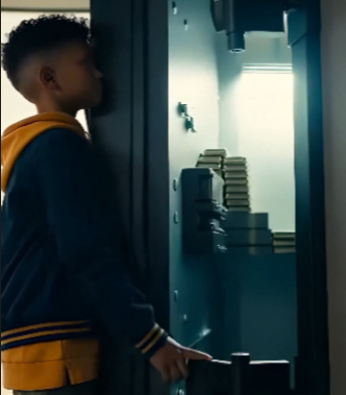
Elena flinched, backing against the wall. She looked at her son, silently begging him to step away. But Leo wasn’t looking at her. He was staring at the safe—the ‘Sanctum 5000.’ It was a monstrosity of black steel and biometric scanners, touted as the most secure vault on the planet. Mateo Sandoval had made his first billion selling the patent for it.

Leo looked up at the billionaire. The fear in the boy’s eyes was gone, replaced by a strange, icy calm. “You promise?” Leo asked softly. “One hundred million?”

The room went silent for a heartbeat, then exploded into fresh laughter.

“I promise,” Mateo wheezed, clutching his stomach. “I’ll write the check right now. Go on. Use your… whatever you people use. A crowbar? A rock?”

Leo stepped forward. He didn’t have a crowbar. He didn’t have a computer.

“Don’t touch the keypad, kid, you’ll set off the silent alarm!” Rodrigo warned mockingly.

Leo ignored them. He approached the massive steel door. He didn’t look at the keypad. Instead, he placed his small, callous hand flat against the cold metal, right over the locking mechanism. He closed his eyes.

“What is he doing? Praying?” Gabriel asked.

Elena watched, her heart hammering against her ribs. She recognized the look on Leo’s face. It was the same look his father used to have.

Leo began to tap.

It wasn’t random. It was rhythmic. Tap-tap… scrape. Tap. Tap-tap… scrape.

He pressed his ear against the heavy door, listening to the tumblers inside. The Sanctum 5000 was fully electronic, a digital fortress. There were no tumblers to listen to. Everyone knew that. That was the selling point.

“He’s crazy,” Mateo scoffed, checking his Rolex. “Alright, show’s over. Elena, get your trash out of my—”

CLICK.

The sound was small, but in the acoustic perfection of the penthouse, it sounded like a gunshot.

The laughter died instantly.

Mateo froze. “What was that?”

Leo kept his hand on the door. He turned the digital dial—not by the numbers, but by the feel of the resistance. He spun it left, right, left again. Then, he entered a code on the keypad. But he didn’t type random numbers. He typed a date.

05-12-2014.

The date Mateo Sandoval released the Sanctum 5000.

The massive hydraulic bolts hissed. Steam vented from the seals. The heavy black door groaned, the sound of gears shifting deep within the mechanism.

Slowly, agonizingly, the door swung open.

The inside of the safe was filled with stacks of cash, gold bars, and sensitive hard drives. But nobody looked at the money. Every pair of eyes was glued to the boy.

Mateo Sandoval’s face went pale, draining of blood until he looked like a wax figure. He dropped his glass; it shattered on the floor, splashing scotch over his Italian shoes.

“How…” Mateo whispered. “That’s impossible. That system… it has no backdoors. It’s unhackable.”

Leo turned around. He looked bigger now. He looked dangerous.

“There are no unhackable systems,” Leo said, his voice steady. “Only systems with ghosts.”

“Who are you?” Mateo demanded, his voice rising to a shriek. “Who taught you that code? That date…”

“My father taught me,” Leo said. “He taught me that every machine has a heartbeat. You just have to know how to feel for it.”

“Your father is a deadbeat who left your mother to scrub floors!” Mateo yelled, stepping forward aggressively.

“No,” Elena spoke up from the corner. She wasn’t trembling anymore. She walked to her son’s side and placed a hand on his shoulder. “His father is dead. But he wasn’t a deadbeat.”

She looked Mateo dead in the eye.

“His name was Arthur Vance.”

The name hit the room like a bomb. The other businessmen gasped. Mateo stumbled back, clutching the edge of his desk.

Arthur Vance. The genius engineer who had supposedly ‘committed suicide’ eight years ago. The man who had actually invented the Sanctum prototype. The man Mateo Sandoval had been business partners with—until Mateo stole the designs, patented them under his own name, and ruined Arthur’s reputation, driving him to an early grave.

“Arthur…” Mateo stammered. “But… he never told anyone the master override. He took it to his grave.”

“He told me,” Leo said coldly. “He used to tap it on my back when he couldn’t sleep. He told me it was a song to keep the monsters away. The monsters who stole his life.”

Leo pointed to the open safe.

“He also told me that if the safe is ever opened with the Master Override, it automatically executes a specific command.”

“What command?” Mateo whispered, sweat beading on his forehead.

Suddenly, the large monitor on the wall behind Mateo flickered to life. It wasn’t showing the stock market anymore. It was showing a video file.

It was Arthur Vance. He looked young, tired, and scared.

“If you’re seeing this,” the video-Arthur said, “then Mateo has won. Or so he thinks. But if this safe is opened by the Master Override, it means my son or wife has found you. This drive is currently uploading every email, every forged signature, and every recording of Mateo’s embezzlement and the hit he ordered on me to the FBI, the IRS, and the press.”

Mateo lunged for the computer, frantically smashing the keyboard. “Stop it! Unplug it!”

“It’s too late,” Leo said. “It’s cloud-based. It’s already gone.”

Sirens began to wail in the distance, getting louder by the second.

Elena squeezed her son’s shoulder, tears of pride streaming down her face. “You owe my son a check, Mr. Sandoval.”

Mateo sank into his chair, a broken man, as the police lights began to flash against the penthouse windows.

“I don’t think he’ll be able to cash it where he’s going,” Leo said, turning his back on the billions. “Come on, Mom. Let’s go home.”

They walked out of the penthouse, leaving the door to the safe—and the truth—wide open.

Bully Pours Coffee On New Kid… Instantly Regrets It


The school bully humiliated the quiet transfer student for a laugh… But he didn’t realize he just declared war on a lethal martial arts master.

Oakridge High wasn’t just a school—it was a battlefield disguised as brick walls and lockers. Everyone knew where they stood. The strong ruled. The quiet endured. And newcomers? They were called “Fresh Meat.”

That’s what they called me on my first day.

My name is Jacob Daniels. To the student body, I was just another transfer student wearing a faded grey hoodie and carrying secondhand textbooks. I kept my head down. I spoke only when spoken to. What they didn’t see were the fifteen years of Taekwondo and Hapkido training carved into my muscles, or the discipline burned into my mind by my grandfather, a Grandmaster who had served in the Korean special forces.

“True strength,” he always told me while I held a horse stance until my legs shook and sweat blinded me, “is not in how hard you can hit. It is knowing when not to strike. A sword stays in its sheath until it is the only option left to save a life.”

I carried that philosophy like a shield. But at Oakridge, shields were meant to be broken.

The hierarchy revealed itself within minutes. Martin Pike stood by the lockers like he owned the building, laughing loudly, surrounded by his crew—football players in letterman jackets who treated the hallway like a VIP lounge. Teachers looked away when he passed. Students lowered their eyes. Martin was 6’2″, built like a linebacker, and thrived on the fear he cultivated.

Near the water fountain stood Rowan—a thin kid with slumped shoulders and bruises he tried to hide with long sleeves, even in the heat. His eyes darted constantly, like prey sensing a predator. When our gazes met, I saw it instantly: years of fear, humiliation, and silence. A silent plea that said, Don’t make it worse. Don’t be noticed.

I kept walking.

That’s when Martin stepped directly into my path and slammed his shoulder into mine. It wasn’t an accident. It was a calculated check. My books scattered across the linoleum floor. Laughter exploded down the hallway, echoing off the metal lockers.

“Watch it, Fresh Meat,” he sneered, looming over me.

I knelt calmly, picking up each book with deliberate care. My breathing stayed steady. My hands didn’t shake. I analyzed his stance—off-balance, weight forward, chin exposed. In the dojo, he would have been on the mat in less than a second. But this wasn’t the dojo.

Martin expected anger. Fear. Tears. He got none.

I stood up, met his eyes for a brief second, and walked away.

Lunch brought no relief. The cafeteria was a segregated map of social status. I sat alone at a wobbly table near the exit until Rowan cautiously joined me. He looked terrified just sitting there.

“You shouldn’t have walked away,” Rowan whispered, picking at his sandwich. “He takes silence as an insult. He wants a reaction.”

“He won’t get one,” I said, opening my water bottle.

“Martin doesn’t stop,” Rowan warned, his voice trembling. “Ever. He put the last transfer kid in the hospital with a ‘accidental’ fall down the bleachers.”

I nodded slowly. I wasn’t here to fight. I was here to survive my senior year and graduate.

Then the shadow fell over our table.

Martin was there. He wasn’t alone; three of his friends flanked him, cutting off my exit. He was holding a large cup of iced coffee, condensation dripping down the plastic.

“Hey, Fresh Meat,” Martin said, his voice feigned friendliness. “I think you look a little thirsty.”

Without waiting for a response, he tipped the cup.

Cold, sticky liquid cascaded over my head. It soaked my hair, ran down my neck, and drenched my hoodie. Ice cubes hit the table with a clatter.

The cafeteria erupted. Hundreds of students laughing, pointing. Phones were out instantly, flashes going off, recording the humiliation.

I didn’t move. I sat there, the coffee dripping off my nose.

“Oops,” Martin laughed, crushing the empty cup and tossing it onto my wet tray. “My bad.”

I felt the adrenaline spike—the fight-or-flight response. My grandfather’s voice echoed in my head. Emotion is the enemy of technique. Breathe.

Slowly, I stood up. I wiped the coffee from my eyes and turned to face him. I was three inches shorter and forty pounds lighter.

“Are you done?” I asked. My voice was low, steady, devoid of the fear he craved.

The room went quiet. The laughter died down, replaced by a tense curiosity.

Martin’s smile faltered. He stepped closer, invading my personal space, his breath hot on my face. “I’m done when I say I’m done, trash. Do something about it.”

He shoved me. Hard.

I stumbled back a step but regained my balance instantly. I looked at his hands—clenched into fists. I looked at his feet—flat, unprepared.

“I don’t want to fight you, Martin,” I said.

“Too bad!” Martin swung. A wild, haymaker punch aimed right at my jaw.

Time slowed down.

To everyone else, it happened in a blur. To me, it was choreography.

I sidestepped the punch with a simple pivot, letting his momentum carry him past me. As he stumbled, I didn’t strike. I just watched him regain his balance, face turning red with rage.

“Stand still!” he screamed, charging again.

This time, he tried to tackle me. I stepped in, grabbed his wrist and his collar, and used his own forward energy against him. With a sharp twist of my hips—a classic Judo throw—I sent him flying over my shoulder.

Martin hit the cafeteria floor with a thunderous thud. The wind was knocked out of him.

Dead silence. You could hear a pin drop.

I didn’t pounce on him. I didn’t start punching. I smoothed out my wet hoodie and looked down at him.

“Stay down,” I said.

Martin scrambled up, humiliation overriding his pain. He roared, grabbing a plastic chair and swinging it like a club. This was no longer bullying; this was assault.

Threat assessment updated. Neutralization required.

I stepped inside the arc of the swinging chair, jamming my forearm into his bicep to kill the power of the swing. In one fluid motion, I swept his legs out from under him. He fell hard, but this time I followed.

I pinned him, my knee on his chest, my hand locking his wrist in a painful submission hold. I applied just enough pressure to let him know that if I wanted to, I could snap his arm like a dry twig.

“Let go!” he screamed, thrashing.

I leaned in, my face inches from his. “Listen to me closely. You are not strong. Making people afraid doesn’t make you a king; it makes you a bully. And today, your reign is over.”

I applied a fraction more pressure. “Do we have an understanding?”

“Yes! Yes! Let go!”

I released him and stood up. I offered him a hand to get up.

He looked at my hand, then at the crowd of students who were no longer laughing. They were staring at me with awe. He slapped my hand away and scrambled to his feet, cradling his arm.

“You’re dead,” he whispered, but there was no venom in it. Only fear. He ran out of the cafeteria, his friends trailing behind him, heads low.

I turned to the table where Rowan was sitting. His mouth was hanging open.

“I need some napkins,” I said calmly.


The aftermath was immediate. By the next morning, the video had a million views. “Kung Fu Kid vs. Bully” was trending locally.

In the principal’s office, Martin’s parents threatened to sue. They claimed I attacked him. But the footage—shot from twenty different angles—showed the truth. The coffee. The shove. The chair. And me, using only self-defense.

Principal Harrison suspended Martin for two weeks. He gave me a warning about “escalation,” but as I left his office, he gave me a subtle nod of respect.

When I walked into the hallway, the atmosphere had shifted. The battlefield had changed.

I went to my locker. Rowan was there, standing tall for the first time.

“Hey,” Rowan said, smiling. “Do you think… maybe you could teach me some of that?”

I looked around. Other kids—the “Fresh Meat,” the nerds, the outcasts—were watching, waiting.

“My grandfather has a garage,” I said. “Training starts at 6 AM. Don’t be late.”

Martin returned two weeks later, but the spell was broken. When he tried to shove a freshman into a locker, three other students stepped up. They didn’t fight him. They just stood there, united. And that was enough.

I didn’t strike him that day in the cafeteria to hurt him. I did it to show everyone else that monsters are only scary until you turn on the lights.

Oakridge High realized something important that year: The quiet ones aren’t always weak. And true strength isn’t about ruling others—it’s about lifting them up.

VIDEO PROMPT:
High school cafeteria, chaotic noise. Focus on Jacob (teen, hoodie) sitting quietly. Slow motion: Bully (Martin) pours iced coffee over Jacob’s head. Liquid splashes dramatically. Jacob doesn’t flinch. He stands slowly, coffee dripping from his nose. Close up on Jacob’s eyes—intense, calm, dangerous. Martin laughs, then throws a punch. Jacob dodges effortlessly and grabs Martin’s wrist in mid-air. The camera zooms on Martin’s face shifting from arrogance to pure shock.

Farmer Walks Into 5-Star Hotel, Manager Runs Out Crying


The receptionist laughed at the dirt-covered farmer and threatened to call security… But when he made one phone call, the hotel owner rushed to the lobby in tears.


The revolving doors of the Grandview Hotel, the crown jewel of Chicago’s Miracle Mile, spun slowly. A gust of biting wind followed the man inside, but it wasn’t the cold that made the lobby fall silent. It was the mud.

Silas stepped onto the pristine Italian marble. His work boots, caked in dried Illinois clay, left faint, dusty prints with every step. He wore a faded flannel shirt with soil stains on the elbows, and his jeans were worn white at the knees. He smelled of diesel fuel, fertilizer, and hard work. He looked like he had just climbed off a tractor—which, in fact, he had done only three hours prior.

Madison, the receptionist, didn’t just glance up; she recoiled. She had spent two hours perfecting her blowout and makeup. She was the gatekeeper of the Grandview, a fortress of exclusivity. Her eyes traveled from his boots to his weathered, sun-baked face, her lip curling in instinctive disgust.

“Can I help you?” Her tone wasn’t a question; it was a warning.

Silas adjusted his trucker hat, holding it in his calloused hands. “Yes, ma’am. I’d like a room for tonight. Just a standard king is fine.”

Madison’s perfectly manicured fingers hovered over the keyboard, but she didn’t type. She let out a sharp, incredulous breath. “Sir, I believe you’re lost. This is the Grandview.”

“I know the name,” Silas said, his voice gravelly but polite. “Nice place.”

“Our rooms start at eight hundred dollars a night,” Madison lied, inflating the price by double just to deter him. “Plus a distinct dress code for guests in common areas.”

“That’s fine,” Silas said, reaching for his back pocket. “I can pay cash, or card. Whichever is easier for you.”

Madison scoffed. From the plush velvet sitting area nearby, two businessmen in grey bespoke suits chuckled. One of them, sipping a scotch, whispered loud enough for the room to hear, “Looks like the landscaper missed the service entrance.”

Madison emboldened by the audience, straightened her spine. “Sir, I am going to ask you to leave. You are disturbing the atmosphere of our establishment. The Super 8 off the interstate is more… your speed.”

Silas didn’t move. He didn’t get angry. He just looked tired. “Miss, I’ve been driving for four hours to meet my son here. I’m tired, I’m hungry, and I have the money. I just want a shower and a bed.”

“And I said no,” Madison snapped, her voice echoing off the high ceilings. She reached for the landline on her desk. “I’m calling security to escort you out. You’re tracking mud on my floor.”

Silas sighed. He looked down at his boots. “I apologize for the floor. I’ll clean it up myself if that helps.”

“Security,” Madison said into the receiver, staring Silas dead in the eye.

The businessmen were laughing openly now. “Go on, old timer,” one called out. “Before you get arrested for loitering.”

Silas’s expression shifted. The polite weariness evaporated, replaced by a steeliness that changed the air pressure in the room. He didn’t leave. Instead, he pulled out an old, cracked smartphone.

“Wait one second on security,” Silas said calmly.

“I’m done waiting,” Madison hissed.

Silas ignored her. He pressed a single speed-dial number and put the phone to his ear. He didn’t break eye contact with Madison.

“Yeah, David? It’s Dad,” Silas said into the phone.

Madison froze. The phone in her hand hovered halfway to her ear.

“Yeah,” Silas continued, his voice booming slightly. “I’m in the lobby. Yeah, the Chicago one. Listen, I can’t get a room. The young lady at the front desk says I’m… what was it? Disturbing the atmosphere.”

There was a pause. Silas nodded. “Yeah, she called security on me. Okay. I’ll wait.”

Silas hung up and slipped the phone back into his pocket.

“Who was that?” Madison asked, her voice trembling slightly. The confidence was beginning to fracture.

“David,” Silas said simply.

“David who?”

Before Silas could answer, the elevator doors at the far end of the lobby chimed. They didn’t just open; they flew apart.

Running—actually running—across the lobby was David Sterling, the CEO of the Sterling Hotel Group, the parent company of the Grandview. He was pale, sweating, and out of breath. He bypassed the security guards who were approaching Silas and nearly slid on the marble as he stopped in front of the dirt-covered farmer.

“Dad!” David gasped, looking horrified. “Dad, I am so sorry. I told them you were coming. I sent a memo this morning!”

The lobby went deathly silent. The businessmen in the corner put their drinks down. Madison dropped the phone receiver. It clattered loudly against the desk.

“Dad?” Madison whispered.

Silas Sterling, the founder of the entire hotel empire—a man who had started as a potato farmer and invested in real estate forty years ago without ever losing his love for the soil—patted his son on the shoulder.

“It’s alright, Davey. Memo probably got lost,” Silas said. He looked at Madison. She had turned a shade of white that matched the marble.

“You…” Madison stammered. “You’re Silas Sterling?”

“I am,” Silas said. “And I don’t care about the room anymore, David. But I do care about how we treat people.”

David turned to Madison. The CEO’s face was red with fury. “Madison, pack your things. You’re done.”

“No, wait,” Silas interrupted, holding up a hand. “Don’t fire her.”

Madison looked up, tears welling in her eyes, hope returning. “Oh, thank you, Mr. Sterling! I promise, I didn’t know! If I had known—”

“That’s the problem,” Silas said, his voice hard. “You shouldn’t have to know who I am to treat me with basic human dignity. If you only respect people you think are powerful, you don’t have respect at all. You have ambition.”

Silas turned to his son. “Don’t fire her. Demote her.”

David nodded, understanding immediately. “Housekeeping. The night shift.”

Silas looked at Madison. “You were worried about the mud on the floor? Good. For the next six months, you’re going to be the one scrubbing it. You’ll clean the toilets, change the sheets, and wipe the floors for the people you mocked today. If you stick it out and learn some humility, maybe you can have your desk back. If not, you can quit.”

Silas picked up his bag. He looked at the businessmen in the corner, who were now pretending to be very interested in their phones.

“Gentlemen,” Silas nodded to them. “Enjoy your scotch.”

He walked toward the elevator, his son carrying his bag. Madison stood paralyzed behind the desk, the silence of the lobby deafening, as the realization of her new reality set in.

I Saved My Daughter Just 5 Minutes Before She Was Buried ALIVE. A Father’s Story

My Pregnant Daughter “Died” During Childbirth — But Her Husband and Mother-in-Law Were Smiling…
Until a Doctor Passed Me and Whispered Five Words That Froze My Blood.

When the phone rang at 3 a.m., shattering the silence of my house, I knew instantly—something irreversible had happened.
It was Martin, my son-in-law. His voice was unnaturally calm, almost mechanical.

“Alejandro, it’s about Lucia. There were complications during childbirth. You need to come to San Rafael Hospital immediately.”

Then he hung up.
No emotion. No tears. Not even “Dad.”

The forty-minute drive felt endless. Rain hammered against the roof of my old sedan, like a countdown to disaster.
My name is Alejandro Morales. I’m 62 years old. After my wife Elena died, Lucia was the only light left in my life.

When I burst into the maternity ward, the smell of antiseptic hit me, mixed with my own cold sweat.
At the end of the hallway, I saw them.

The Sandoval clan.
My son-in-law’s family.

Martin stood there with his mother, Doña Remedios—a woman with an icy stare who had always believed my daughter wasn’t good enough for their “noble blood.”
Beside them were his father, Don Augusto, and two brothers built like nightclub bouncers.

But the worst part wasn’t their presence.

It was their faces.

They weren’t crying.
At the corner of Doña Remedios’s lips was a faint, almost satisfied smile.
Martin was checking the time on his expensive watch, as if he were late for a business meeting.

“WHERE IS LUCIA?!” I shouted. My voice echoed down the hall.

The Sandovals closed ranks, forming a human wall.

“Alejandro, please sit down,” Remedios said firmly.
“Lucia didn’t survive. A thromboembolism. It happened instantly. The doctors couldn’t do anything.”

The world tilted.

“I want to see her. Now.”

“You can’t,” Martin’s brother Roberto snapped, blocking my way.
“They’re already preparing her for the morgue. It’s better to remember her alive. The baby survived. A boy. He’s fine.”

That’s when I noticed it.

Martin and his father exchanged a quick glance.
It wasn’t a look of grief.

It was the look of accomplices—of men whose plan was working perfectly.

My daughter was “dead,” and they looked like they had just closed a profitable deal.

“I’m not leaving until I see my daughter’s body!” I tried to push past them, but they shoved me back.

“Calm down, Mr. Morales,” Don Augusto growled.
“Or we’ll call security.”

I stepped back, gasping for air, pretending to give in. I moved toward a water vending machine, my eyes scanning the hallway.

A young doctor stepped out of the ICU—Dr. Valenzuela.
He looked pale. His hands trembled as he removed his gloves.

The Sandovals weren’t watching him. They were too busy whispering among themselves.

I caught the doctor near the corner.

“Doctor,” I begged, grabbing his sleeve.
“I’m Lucia’s father. Please—tell me the truth. How did she die?”

He glanced nervously toward the Sandovals.
In his eyes, I saw pure, animal fear.

He leaned in, pretending to adjust his coat, and whispered—his words hitting me like a gunshot:

“They’re not crying… because she’s alive.”

I froze.

“What?”

“Quiet,” he hissed.
“They paid the chief physician. They declared her dead so they could take the baby and have you declared mentally unfit from grief. Lucia is drugged—she’s in a coma, but she’s alive. In twenty minutes, they’ll take her out the back as a ‘body’… to get rid of her permanently.”

Blood rushed to my head.
Rage—hot and blinding—flooded my body.

But I knew: if I attacked them now, I’d lose everything.
I was one man against a powerful family and a corrupt hospital.

“Where is she?” I mouthed.

“Basement. Room 402. You don’t have much time. Sandoval’s security is already there.”

I nodded.

Loud enough for the Sandovals to hear, I said,
“Thank you, Doctor. I’m going to the chapel to pray.”

I walked slowly toward the exit, feeling Doña Remedios’s gaze burn into my back.

The moment I turned the corner—I ran.

I don’t know where the strength came from in a 62-year-old man, but I ran toward the service stairs leading to the basement.

As I descended, I pulled out my phone and called the only person who could help—my old army friend, now the county police chief.

“Carlos, I need help. Now. San Rafael Hospital. They’re kidnapping my daughter.”

The basement was cold and silent.
I moved along the walls, hearing footsteps ahead.

Two men stood outside Room 402.
One was Don Augusto’s personal driver.

I looked around.
On a fire safety panel hung a heavy fire extinguisher.

I grabbed it, feeling the cold steel in my hands.
I wasn’t an action hero.

I was a father.

A father about to lose the last thing he had.

I stepped out of the shadows.

“HEY!”

One guard turned, his hand reaching for a concealed gun—but he didn’t expect the “old man” to move that fast.
I blasted him in the face with foam and smashed the extinguisher into his shoulder. He collapsed.

The second lunged at me, but adrenaline does miracles—I shoved him into a rolling equipment cart.

I burst into the room.

Lucia lay on a gurney, pale, wired to monitors, covered with a sheet over her head—like a corpse.

But the monitor was beeping.

A heartbeat.

She was alive.

I ripped the sheet away.
Her chest rose faintly.

“Lucia… my baby… Daddy’s here,” I whispered, fumbling with the restraints on her wrists.

The door slammed open behind me.

Martin stood there.

In his hand—a silenced pistol.

His calm mask was gone. His face twisted with hatred.

“You were supposed to go home and cry, old man,” he spat.
“We don’t need her. We only need the heir. And Lucia… she knew too much about my father’s business.”

“You’re not taking her,” I said, stepping between him and my daughter.

“I’ll kill you right here,” Martin sneered, raising the gun.
“We’ll say you went insane with grief and killed yourself.”

Time slowed.

I stared down the barrel of the gun, thinking only one thing:

I just need to buy her one more minute.

Suddenly, blue lights flooded the hallway, and a voice boomed through a megaphone:

“POLICE! DROP THE WEAPON!”

Carlos had made it.

Martin hesitated for a split second.

That was enough.

I lunged at him, knocking him down.
The shot fired into the ceiling.

We rolled across the floor before the SWAT team stormed in and restrained him.

One month later.

I’m sitting in my garden.
Lucia is beside me in a wheelchair—still weak, but alive.

In her arms sleeps my grandson, little Mateo.

The Sandoval family is finished.
Arrests. Scandals. Trials.

Dr. Valenzuela became the key witness in exchange for protection.
It turned out to be a whole system—eliminating “inconvenient” wives and mothers in powerful families.

Lucia looks at me and smiles faintly.

“Thank you, Dad,” she whispers.

I squeeze her hand.

The world is cruel.
But as long as I’m breathing, no shadow will ever touch my family again.

I never believed in conspiracies—
until I became part of one.

And I won.

She Mocked A Construction Worker’s Clothes, Then He Cancelled Her Million Dollar Contract


She humiliated a dusty construction worker for ruining her expensive suit in the elevator… But when she walked into the boardroom to save her company, he was sitting at the head of the table.

Elena Vance checked her reflection in the polished brass of the elevator doors for the tenth time that morning. Everything had to be perfect. Her hair was pulled back in a severe, surgical bun; her makeup was flawless; and her bespoke Armani suit—white, crisp, and costing more than most people’s cars—screamed power.

As the CEO of NexaStream, a marketing firm on the brink of going global, Elena was used to getting what she wanted. But today, she was on edge. The lease for their prime downtown headquarters was up for renewal, and the building’s elusive owner, a man known only as “Mr. Sterling,” was notoriously difficult. Rumors swirled that he was looking to convert the high-rise into luxury condos, which would leave NexaStream homeless.

The elevator dinged on the lobby floor. Elena stepped in, tapping furiously on her phone, sending instructions to her assistant.

“Hold the door!” a rough voice called out.

Elena sighed, pressing the ‘Open’ button with exaggerated reluctance. A man squeezed through the closing gap. He was a stark contrast to the gleaming marble of the lobby. He wore faded Carhartt pants covered in drywall dust, a stained grey t-shirt, and heavy, mud-caked boots. He was carrying a massive toolbox in one hand and a precarious stack of blueprints in the other.

As the elevator jolted upward, the man shifted his weight. The blueprints slipped. He lunged to catch them, and in doing so, his dusty elbow slammed into Elena’s shoulder. A cloud of white gypsum dust puffed into the air, settling instantly onto her pristine white blazer.

Elena gasped, staring at the grey smudge spreading across her sleeve. The silence in the elevator was deafening.

“Oh, shoot,” the man said, grimacing. He reached out a callous hand as if to brush it off. “I’m so sorry, miss. Let me just—”

“Don’t touch me!” Elena shrieked, slapping his hand away. She backed into the corner of the elevator, her face twisting in disgust. “Look at this! Do you have any idea how much this costs?”

The man lowered his hand, his expression shifting from apologetic to unreadable. “It’s just a bit of dust. It’ll brush right out.”

“Just dust?” Elena laughed, a cruel, sharp sound. “This is Italian silk. You’ve ruined it. God, why do they let people like you use the main elevators? There’s a service lift for the help.”

The man straightened up. He was tall, with piercing blue eyes that seemed to look right through her. “The service lift is broken. I’m just trying to get to the penthouse floor to check on the renovations.”

“I don’t care,” Elena snapped, aggressively scrubbing at her sleeve with a tissue, which only smeared the dust further. “You’re clumsy, dirty, and frankly, a liability. Who is your foreman? I’m going to have a word with building management. I want you off this site within the hour.”

The man tilted his head. “You want me fired? For an accident?”

“I want you gone so I don’t have to breathe the same air as you,” she sneered. “I am Elena Vance. I run the company that pays for three floors of this building. I pay your salary. So, show some respect, or I’ll make sure you never work in this city again.”

The elevator dinged at the 40th floor—Elena’s floor.

“Good luck with your meeting, Elena,” the man said quietly as the doors opened.

“That’s Ms. Vance to you,” she spat, storming out without looking back.

She rushed to her office, frantically calling her assistant to fetch a replacement jacket. The stress of the upcoming meeting compounded with her rage. She stripped off the ruined blazer, throwing it into the trash can.

“He’s here,” her assistant, Sarah, whispered, poking her head into the office ten minutes later. “Mr. Sterling’s legal team is in the boardroom. They’re waiting for the owner to arrive.”

Elena smoothed her backup blazer—black, less impressive, but acceptable. “Showtime,” she muttered. She needed this lease. NexaStream’s investors were watching. If she lost this location, the company’s valuation would tank.

She walked into the boardroom with her signature confident stride. Three lawyers in grey suits sat on one side of the long mahogany table. They stood respectfully as she entered.

“Ms. Vance,” the lead lawyer said. “Mr. Sterling will be joining us shortly. He likes to handle final negotiations personally.”

Elena sat at the opposite end, arranging her papers. “I appreciate his time. Though I hope he’s more professional than the staff he employs in this building.”

The lawyers exchanged confused glances.

The heavy double doors at the end of the room creaked open. Elena stood up, pasting a charming smile on her face, ready to greet the billionaire real estate tycoon.

But the smile froze.

Walking through the door was the construction worker.

He was still wearing the dusty pants and the stained t-shirt. He hadn’t changed. He walked calmly past the stunned Elena, pulled out the leather chair at the head of the table—the seat reserved for the owner—and sat down.

Elena blinked. Her brain couldn’t process the image. “Excuse me?” she barked, her voice trembling with indignation. “What are you doing? The meeting is about to start. Maintenance isn’t needed in here.”

She turned to the lawyers. “Why is he sitting there? Get him out.”

The lead lawyer looked uncomfortable. “Ms. Vance… this is Mr. Lucas Sterling.”

The room fell into a silence so heavy it felt like it would crush Elena’s lungs. She looked at the man. Really looked at him. Under the dust and the grime, she saw the intelligence in his eyes, the authority in his posture.

Lucas Sterling leaned back in the chair, resting his work boots on the expensive carpet. He picked up the lease agreement file and flipped it open.

“Ms. Vance,” Lucas said, his voice calm but icy. “We met in the elevator.”

Elena’s mouth opened and closed like a fish out of water. Her face turned a violent shade of red. “I… I thought… you were…”

“The help?” Lucas finished for her. “Dirty? Clumsy? A liability?”

“Mr. Sterling,” Elena stammered, her hands shaking as she gripped the edge of the table. “I had no idea. If I had known—”

“If you had known I was rich, you would have treated me with respect,” Lucas cut in. “But because you thought I was a worker, you treated me like garbage.”

“I was stressed,” Elena pleaded, her carefully constructed persona crumbling. “My suit… it was expensive. It was a momentary lapse in judgment.”

“Character isn’t defined by how you treat your equals, Elena,” Lucas said, closing the file with a sharp thud. “It’s defined by how you treat those you think are beneath you.”

He looked at his lawyers. “Gentlemen, do we have a clause in our standard contracts regarding tenant conduct and building environment?”

“We do, sir,” the lawyer replied. “Clause 14B: The landlord reserves the right to terminate negotiations if the tenant creates a hostile or discriminatory environment for staff, residents, or management.”

Lucas nodded. He looked back at Elena. “I built this company from the ground up. I started pouring concrete when I was eighteen. My father was a construction worker. The men and women who keep this building running—the janitors, the maintenance crew, the drywallers—they are my people. I will not have them sneered at by a tenant who thinks a $5,000 suit makes her a god.”

“Please,” Elena whispered, tears of humiliation pricking her eyes. “NexaStream needs this space. We employ two hundred people. You can’t do this over a jacket.”

“I’m not doing it over a jacket,” Lucas said, standing up. He grabbed his toolbox from under the table. “I’m doing it because I don’t do business with bullies.”

He tossed the unsigned lease across the table. It slid until it hit Elena’s hand.

“You have thirty days to vacate the premises,” Lucas said, turning toward the door. “Oh, and Elena?”

She looked up, broken.

“Take the stairs on your way out. I wouldn’t want you to run into any more ‘trash’ in the elevator.”

Lucas walked out, leaving Elena alone in the silent boardroom, surrounded by glass walls that offered a view of the city she used to think she owned.