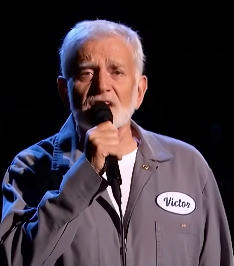
The judges rolled their eyes when the janitor asked for the microphone… But the moment he hit the first note of “Only You,” the entire theater went dead silent.
The “Golden Mic” talent showcase was a place for glitter, sequins, and polished rehearsals. It was not a place for Elias.
Elias was sixty-two, wore a faded grey jumpsuit that smelled faintly of lemon cleaner and floor wax, and had spent the last twenty years mopping the very stage where dreams were made and broken. He was invisible—a ghost in the machine of the entertainment industry. He knew the squeak of every floorboard and the hum of every spotlight, yet no one knew his name.
On this particular Tuesday, the atmosphere was toxic. The lead judge, a sleek producer named Marcus Vance, had just shredded a young pop singer to tears. “Next!” Vance barked, checking his watch. “And make it quick. I have a dinner reservation.”
There was a mix-up in the wings. The next act—a fire breather—hadn’t arrived. The stage manager, panicked, looked around. Elias was there, broom in hand, sweeping up glitter from the previous act.
“Hey, you!” the stage manager hissed. “Just… stand there. Hold the mic. Let me check the audio levels while we wait.”
Elias hesitated. He leaned his broom against the velvet curtain and limped toward center stage. The audience, bored and restless, began to titter. Someone in the back whistled mockingly. Marcus Vance looked up, lowered his sunglasses, and sneered. “What is this? The cleaning crew act? We really are scraping the bottom of the barrel.”
Laughter rippled through the auditorium. Elias felt the heat rise in his cheeks. He looked at his scarred hands, then at the pianist, a kind man named Jerry who knew Elias often hummed while he worked.
“Just a sound check, Elias,” Jerry whispered, giving him a wink. “Play whatever you want.”
Elias closed his eyes. He didn’t think about the mocking crowd or the arrogant judge. He thought about 1955. He thought about a dusty record player in his childhood living room. He thought about Tony Williams and The Platters. He thought about the song that had defined the golden age of R&B—an anthem of unwavering love that transcended trends.
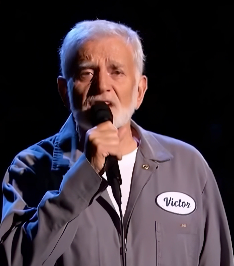
He nodded to Jerry. Jerry struck the opening chord. Bum-bum-bum-bum…
The iconic, triplet-driven piano intro of “Only You (And You Alone)” floated through the air. The crowd giggled. It was such an old, cliché song. What was the janitor going to do? Ruin a classic?
Then, Elias opened his mouth.
“Oh-nly you…”
The sound that came out was not the voice of a tired old janitor. It was a resonant, velvet cannon blast of pure soul. He hit the signature vocal break—that famous “Oh-nly”—with a quiver so precise, so full of heartbreaking vulnerability, that it felt like Tony Williams himself had descended from the rafters.
The laughter died instantly. It was as if the air had been sucked out of the room.
Elias wasn’t singing for the judges. He was singing for his late wife, Martha. He was singing about a love that anchored him in a world that treated him like furniture. The lyrics, penned by Buck Ram decades ago, were simple, but Elias treated them like scripture.
“Can make this world seem right…”

His voice soared, rich and clear, carrying the weight of a thousand heartbreaks and a thousand joys. It possessed that rare, serendipitous magic that happened during The Platters’ original rehearsal—a capture of raw passion. He navigated the melody with a masterclass in emotional restraint, the way the song was intended. It wasn’t just a performance; it was a resurrection of a feeling.
Marcus Vance, the cynical judge, slowly took his sunglasses all the way off. His mouth hung slightly open. The production assistant in the wings stopped chewing her gum.
Elias climbed the scale to the bridge. The piano accompaniment, usually just a backdrop, seemed to weave around his voice, creating that perfect marriage of melody and feeling that had made the song a #1 hit in the UK and a staple in films like American Graffiti. But here, in this room, it wasn’t a movie soundtrack. It was real.
When Elias hit the climax—“You are my destiny”—his voice cracked with such authentic, raw emotion that a woman in the front row audibly sobbed. He wasn’t performing; he was bleeding out his soul, reminding every person in that room of the universality of love. He was the embodiment of the song’s history—a timeless harmony etched into the heart, proving that true talent doesn’t fade with age or hide behind expensive costumes.
He held the final note, a shimmering vibrato that seemed to suspend time itself.
“…and you alone.”
The piano faded. Elias stood there, head bowed, hands trembling slightly at his sides.
For three seconds, there was total silence. The kind of silence that is heavy and holy.
Then, the room exploded.
It wasn’t polite applause. It was a roar. People jumped to their feet. The cynical Marcus Vance stood up, clapping his hands high above his head. The stage manager was crying. The audience, who had mocked his jumpsuit moments ago, was now chanting his name.
Elias looked up, blinking in the spotlight, a shy smile breaking through his weathered face. He reached for his broom, but Jerry the pianist grabbed his hand and raised it high.
In a world full of fleeting trends, Elias had reminded them that some things—like pure talent and the power of a song like “Only You”—are immortal.